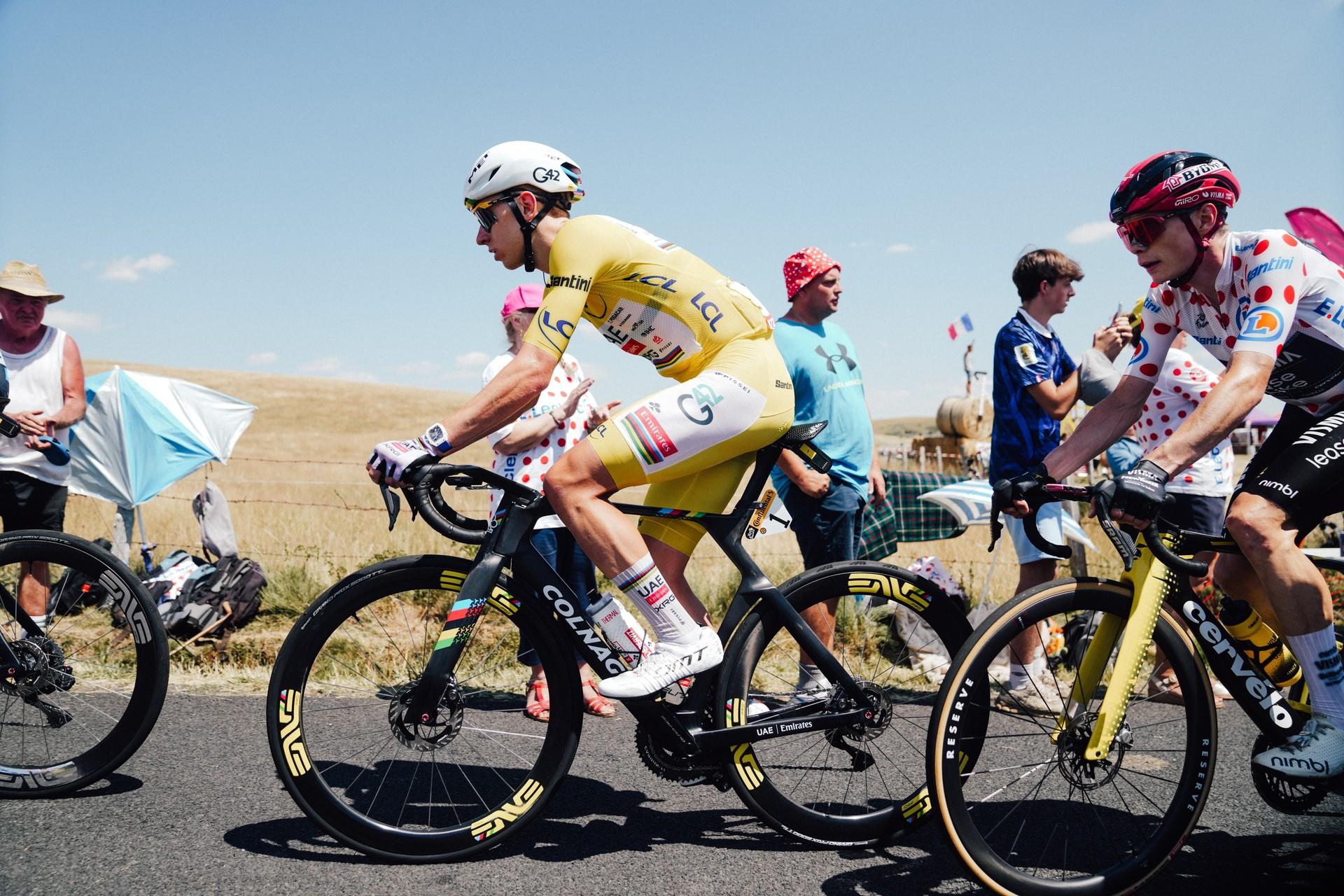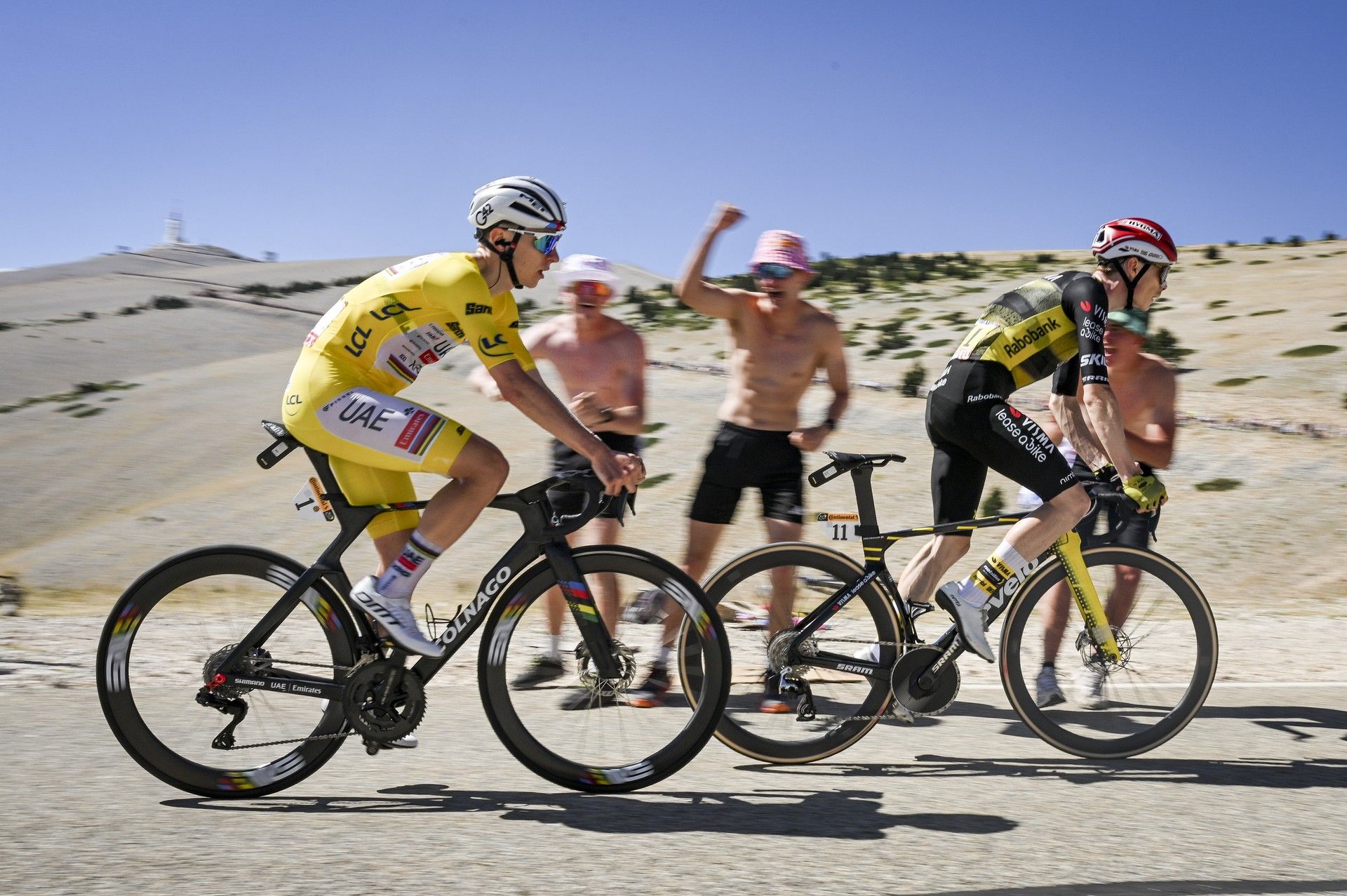
Mont Ventoux hasn’t changed since Chris Froome tore it apart in 2013. The riders have. In 2025, Tadej Pogačar climbed the same mountain four minutes faster than Froome’s reconstructed benchmark, and did it in a two-up duel rather than behind a Sky metronome.
That contrast shows how far the sport has moved in twelve years. Training is more advanced, pacing is smarter, the bikes are faster and fuelling is more precise. The ceiling of what the very best can sustain on a long, steep climb has shifted upwards, and Ventoux is one of the few places where you can see that evolution written straight into the stopwatch.
Below, we look at exactly what separates 2013 from 2025 on the Giant of Provence.
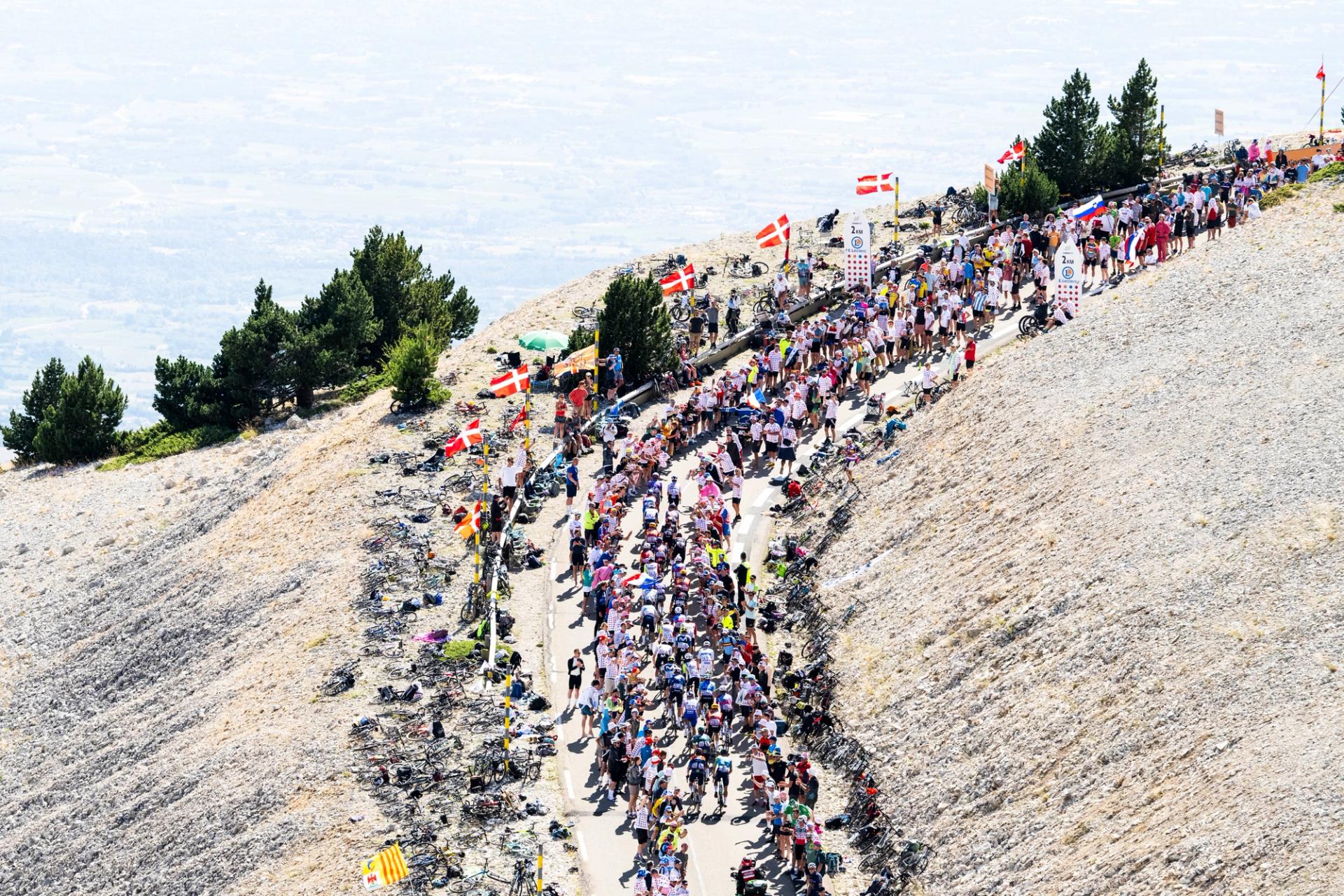
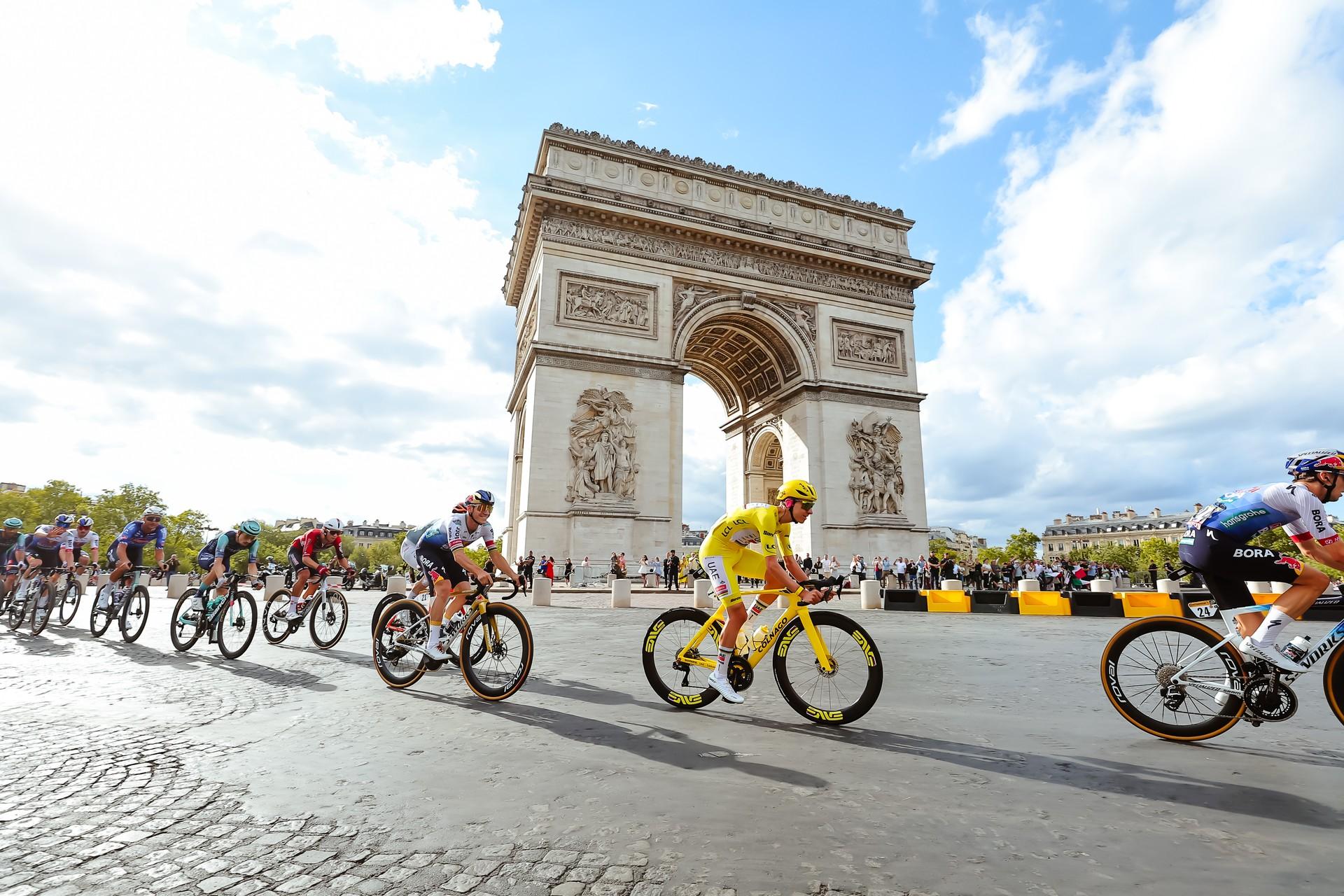
The slopes on Mont Ventoux during the 2025 Tour de France - credit A.S.O./Charly López
1. Two days on the Giant of Provence
The mountain is the constant. From Bédoin, Mont Ventoux is ~20.7–21.5 km (depending on where you specifically measure from) at roughly 8%, about 1,600 m of vertical. The first few kilometres roll, the forest section to Chalet Reynard is a shaded wall, and the last 6 km to the weather station are a moonscape, where wind can be worth more than a set of deep wheels.
Froome, 2013: a long, hot execution
- Stage: 242.5 km from Givors to Ventoux – one of the longest days of that Tour.
- Conditions: air temperatures near 40°C on the lower slopes; reports of a noticeable headwind in the exposed upper kilometres.
- Race context: Froome already in yellow. Sky rode the classic “control and cull” template: Kennaugh, then Porte, squeezing the group until only a handful of GC leaders remained.
- Attack pattern: Froome waited. The decisive move came around 7 km from the line, followed by another blistering acceleration inside the last 2 km. Nairo Quintana was first dropped, then clawed back some seconds as Froome paid for the earlier violence.
- Aftermath: Froome crossed the line emptied, needing supplemental oxygen in the mixed zone. The optics – hollowed cheeks, oxygen mask, enormous time gaps – fed the immediate comparison with Armstrong‑era summit finishes.
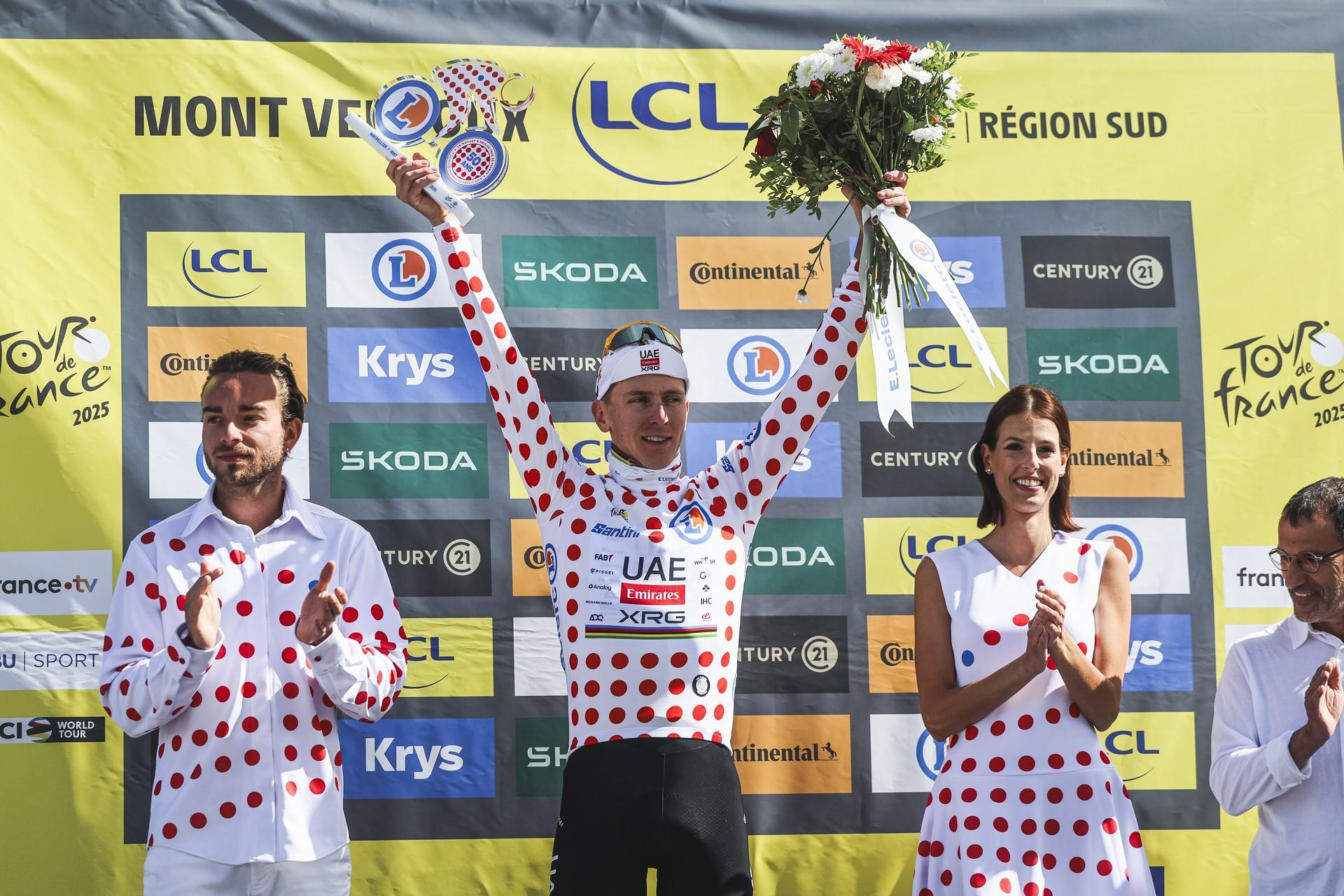
No single, fully agreed Bédoin–summit time was ever formalised, but analysis of the full climb typically lands Froome in the high‑50‑minute range (≈58:30–59:00), with a VAM around 1,600 m/h.
Pogačar, 2025: record pace in a two‑up war
Pogačar's data‑rich ascent of Ventoux came in his 2025 Tour Stage 16 ride, where he took the Strava‑tracked Bédoin → weather‑tower KOM.
- Stage: roughly 150 km of approach, then the full Bédoin side as a summit finish.
- Conditions: warm but not brutal – mid‑20s°C at the base, cooler near the top. Riders and teams noted a “nagging headwind” on the final exposed kilometres – average wind speed was 15.2 km/h – but nothing like the furnace of 2013.
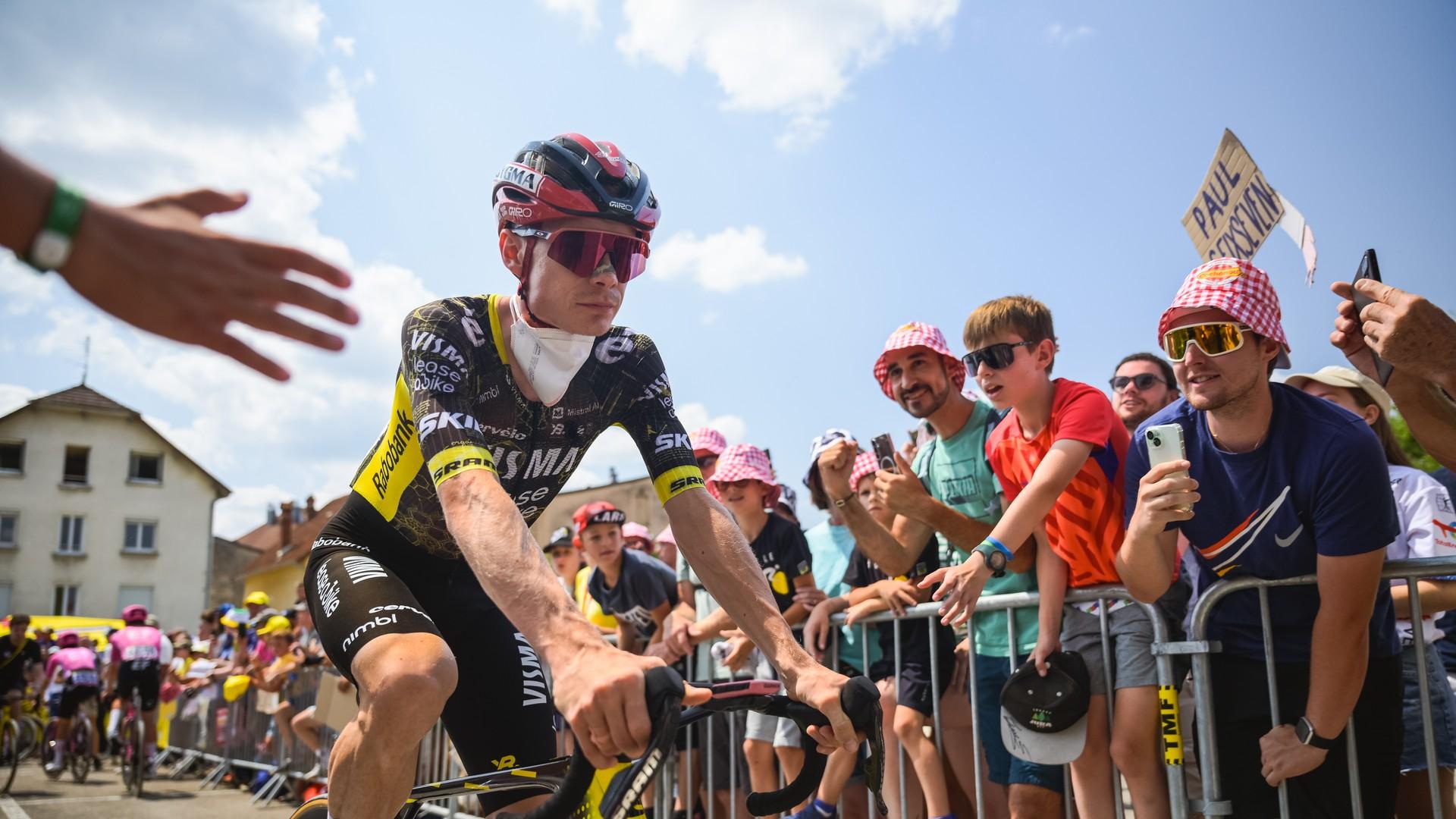
- Race context: Pogačar in yellow, Jonas Vingegaard the only rival able to go with him. UAE and Visma had burned domestiques early; by Chalet Reynard it was essentially two leaders and whatever they had left.
- Attack pattern: instead of Sky‑style strangulation and one decisive move, this was a duel almost from the forest. Vingegaard launched repeated attacks – four notable digs – with Pogačar closing each one before countering in the final kilometre.
The Strava‑anchored time on the Bédoin → weather‑tower segment sits at ≈54:30 (variously reported 54:30–54:51). That’s roughly 4–5 minutes faster than Froome’s reconstructed full‑climb mark.
In other words: same mountain, similar side, summit finish conditions – but a different era of climbing.
2. The numbers: watts, kilos, minutes
Strip the narratives away and you’re left with three core metrics on Ventoux: time, power‑to‑weight, and VAM.
Time and speed
- Froome 2013
• Reconstructed Bédoin–summit time: ≈58:30–59:00
• VAM: ≈1,600 m/h - Pogačar 2025 record
• Bédoin → weather‑tower (20.7 km): ≈54:30
• VAM: materially higher (consistent with the shorter time over same elevation gain).
Even allowing for a few seconds of start‑point disagreement, the gap is in the region of 3½–5 minutes.
Power and W/kg
Both rides have been dissected by analysts using combinations of leaked data, on‑bike files, and physics‑based estimation.
VO2max
Both riders have attracted speculation about VO2max. Froome published lab-tested values in Esquire – 84.6, extrapolated to 88.2 at race weight. Pogačar hasn’t released supervised tests, but recent analyses suggest his VO2max may exceed 90 mL/kg/min.
Together, the estimates place both near the upper physiological limits seen in elite endurance sport.
Froome 2013
- Leaked SRM files led to early claims of >6 W/kg for the whole climb, but subsequent scrutiny identified a chainring/power‑meter calibration artefact and over‑estimated race weight.
- Once corrected, multiple independent analyses converge around:
• Mean power: ~414 W
• Race weight: ~67.5 kg
• Sustained power‑to‑weight: ≈5.8 W/kg for the main climbing effort.
Pogačar 2025
- We don’t have his raw file, but several groups have reverse‑engineered from speed, gradient and conditions.
- Published estimates cluster around:
• Mean power: ~421–442 W
• Race weight: ~66 kg
• Sustained power‑to‑weight: ≈6.4–6.5 W/kg.
That’s an ≈0.6–0.7 W/kg advantage in Pogačar’s favour – roughly an 11–12% higher sustainable climbing output.
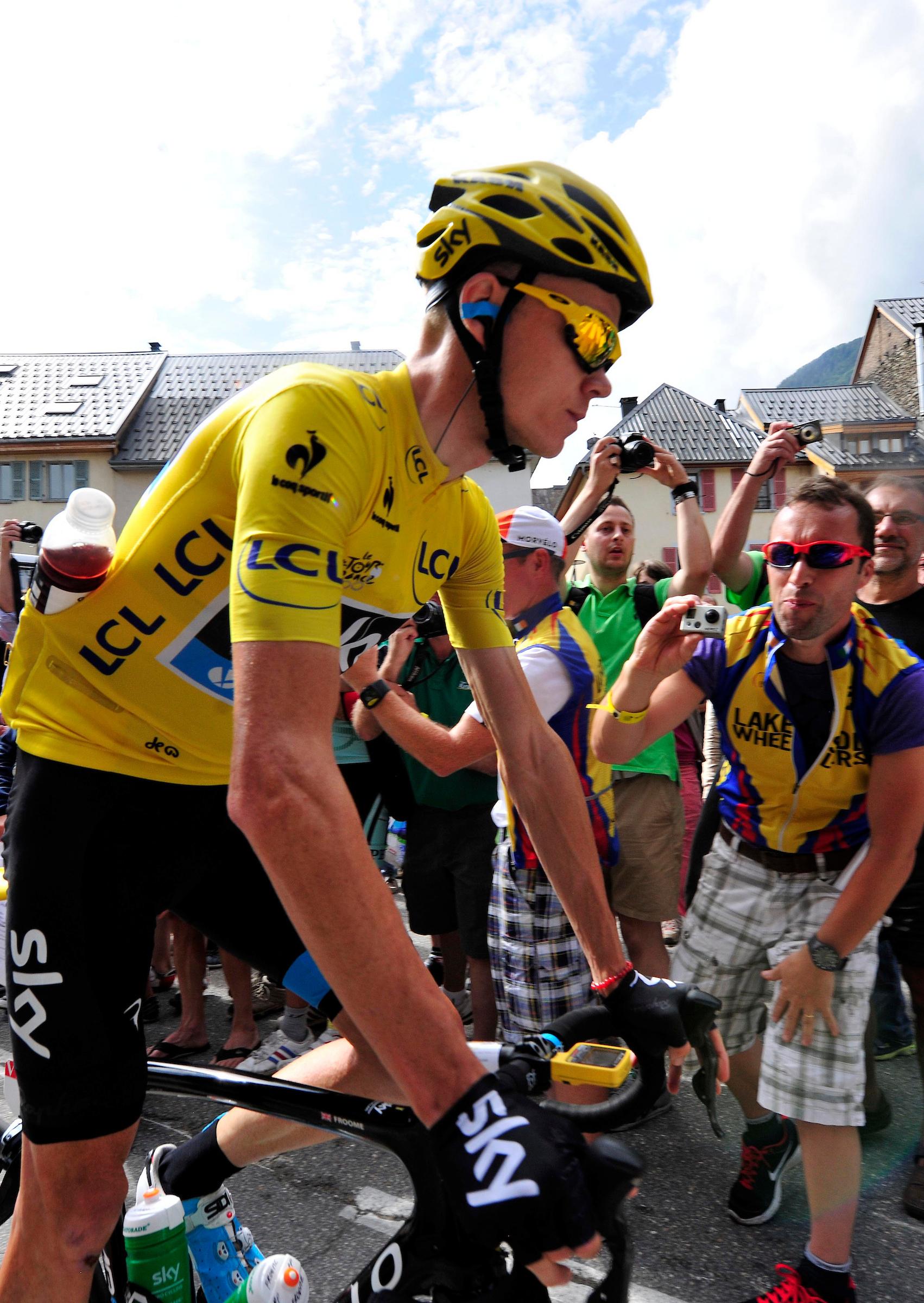
Picture credit: Simon Wilkinson/SWpix.com
A 0.6–0.7 W/kg jump is huge on a long, steep climb. In simple gravity terms, an 11–12% gain in W/kg cuts roughly the same percentage from your time. Take Froome’s ~58-minute benchmark at 5.8 W/kg: bump it to 6.45 W/kg and the physics points to ~51–52 minutes.
The rest comes from the margins – pacing, tactics, nutrition and kit – the things that decide how fully a rider can turn power into speed.
3. Tactics, tech, and the marginal minutes
Nutrition & Fuelling
Modern fuelling has shifted dramatically since 2013. Most WorldTour teams now target 100–120 g of carbohydrate per hour, using glucose–fructose mixes that tap multiple absorption pathways. This lets riders sustain high power deeper into long climbs without the late-stage fade that once defined summit finishes.
When executed well, super-high-carb fuelling acts as a steady energy “pipe” that helps riders like Pogačar express their true 6.4–6.5 W/kg ceiling on climbs where earlier generations often ran short.
That said, Froome was the leading rider in an age of marginal gains, and his nutrition strategy would have been near-flawless – even if it lacked the sheer fuelling volume of today’s 120 g/h era.
Tactical shape of the effort
Sky’s metronome vs a two‑up knife fight.
Froome’s 2013 climb came after 242.5 km in killer heat. Sky rode to a script: domestiques on the front, constant pressure, then the leader’s knockout jump. That pacing model is deliberately sub‑maximal for most of the climb; the goal is not an absolute record, it’s to shred rivals with the least risk to the yellow jersey.
By the time Froome attacked, his glycolytic matchbook was already half burnt by the stage as a whole. You see it in the way Quintana claws back some seconds late on: Froome over‑reached for maybe 2–3 minutes at unsustainable power to land a time gap, then paid for it.
Pogačar’s record Ventoux, in contrast, was a shorter stage after a rest day, and the defining climb was raced at or very close to the leaders’ functional ceilings from the forest onward. Vingegaard’s repeated attacks forced high‑intensity surges, but they were stacked on top of a much purer climbing effort: fewer tactical brakes, closer to a lab‑style maximal test.
That matters. A rider who can do 6.4–6.5 W/kg for ~40 minutes doesn’t always get to display it in a Grand Tour race; 2025’s Ventoux essentially invited Pogačar to do exactly that.
Technology: what changed in 12 years
Between 2013 and 2025, climbing tech didn’t stand still. None of these things add up to “minutes” on their own, but together they shave meaningful margins.
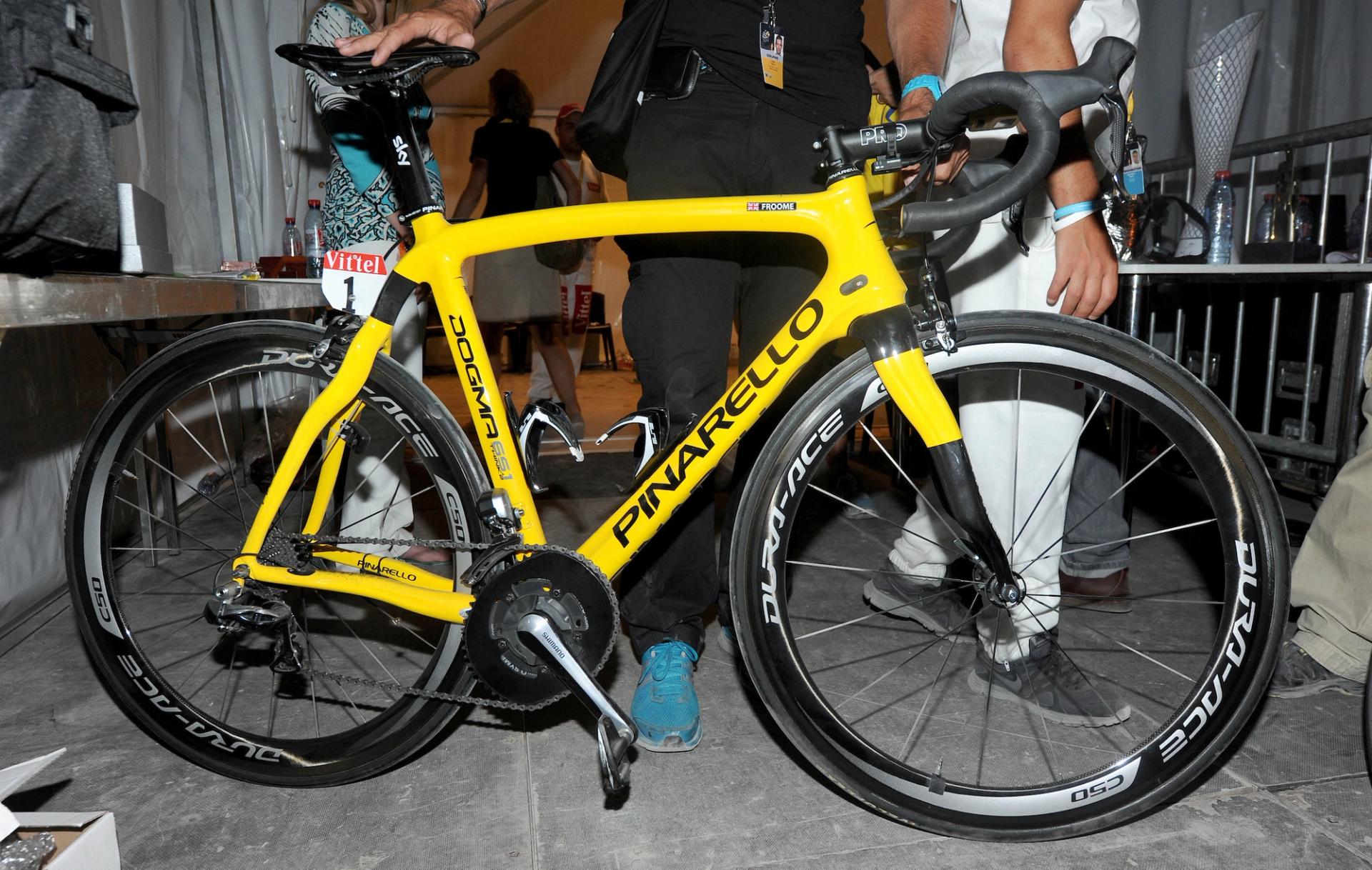
Chris Froome's 2013 Pinarello Dogma - Image credit: Simon Wilkinson/SWpix.com
- Wheels and tyres
2013: narrow tubs, higher rolling resistance, less optimised pressures.
2025: wide‑profile carbon rims with light tubeless setups, Crr markedly lower, and carefully tuned pressures even uphill. On a 55–60 minute climb, that’s easily tens of seconds. - Frames and integration
Froome’s Dogma 65.1 was light and relatively aero for its time, but a modern Colnago V4Rs‑type chassis is stiffer, at the UCI weight limit, and significantly slipperier in the wind. Even on an 8% climb, aero still matters at 20+ km/h. - Clothing and helmets
Modern climbing skinsuits, vented aero helmets, hyper‑breathable fabrics. Froome in 2013 was not wearing the flappy jerseys that were ubiquitous in the 1990s, but in comparison with Pogačar’s one-piece speed suit (with no rear pockets) on the 2025 ascent, there would have been a serious aerodynamic penalty. - Data and pacing
Teams now build climbs like Ventoux into modelling software with far better power‑meter accuracy. On‑the‑bike pacing is closer to optimal; fuelling strategies are better aligned with actual demands.
All in, tech probably explains a small but real fraction of the time gap – call it maybe 30–60 seconds – but it amplifies what physiology and tactics already dictate.
It also explains why Pogačar’s Ventoux bike, one of the raw‑carbon Colnagos from that Tour, has become quasi-jewellery: when his Tour‑winning Colnago hit $190,500 at Sotheby’s, bidders weren’t just buying carbon, they were buying a very literal symbol of where the upper limit of road climbing now sits.
4. Suspicion, context, and what it really tells us
Any time someone bends a famous climb to their will, the sport’s past walks into the room.
Froome: data leaks and oxygen masks
Froome’s 2013 Ventoux was received in two registers. On the one hand: awe at the dominance, the Bastille Day symbolism, the yellow jersey crushing the mountain. On the other: deeply ingrained scepticism.
The images of Froome gasping into an oxygen mask, the rapid acceleration after 240 km in extreme heat, and the sheer numerical impressiveness of the ride triggered a wave of analysis pieces. Leaked power files were pored over; early misunderstandings (chainring calibration, incorrect body mass) produced inflated W/kg numbers that were then walked back.
Team Sky commissioned independent physiological reports, released partial lab data, and lent on the language of “marginal gains” – for many, a necessary but not sufficient reassurance.
Pogačar: incredulity in a supposedly cleaner era
Pogačar’s record Ventoux ascent landed in a very different media ecosystem but under the same long shadow. Modern anti‑doping is stricter, biological passports more sophisticated, and public commentary has become more cautious – few major outlets now throw around explicit accusations without hard evidence.
Yet the numbers themselves – 6.4–6.5 W/kg for nearly 40 minutes, new records on climbs already ridden at a high level in the mid‑2010s, domination across terrains – invite incredulity.
Contemporaneous coverage of the 2025 stage balanced awe with caveats: analysts flagged the unprecedented W/kg, fans filled comment sections with “how is this possible?”, but there has been no public positive test or passport case tied to that ride or to Pogačar’s broader record.
Froome's dominance was shrouded with scrutiny and doubt, and often completely unfair aggression from fans. By contrast, the larger jump in modern climbing performance has not produced the same volume of doubt, for better or worse.
The only defensible position is simple:
- Exceptional performances warrant scrutiny.
- Data estimates and historical scar tissue are not, on their own, proof of wrongdoing.
- Without hard evidence – testing anomalies, admissions, forensic investigations – Verdicts stay in the realm of belief rather than knowledge.
What it actually changes for how we watch
For the engaged fan, the Froome vs Pogačar Ventoux comparison is less about “who’s better?” and more about recalibrating what’s physically and structurally possible.
- It reminds us that 0.6–0.7 W/kg at the very top end is enormous – whole eras of climbing history separate riders who look only marginally different on paper.
- It underlines how much race design (rest‑day placement, stage length) and pacing style dictate whether we see that ceiling or something 10–15 watts lower.
- It illustrates that tech and training, layered over a decade, can turn what once looked like a limit into a reference point to surpass.
Froome’s 2013 Ventoux has been heavily contextualised by Pogačar's ascent. What read then as a hard border of clean performance now looks, in hindsight, like a prelude to a higher plateau.