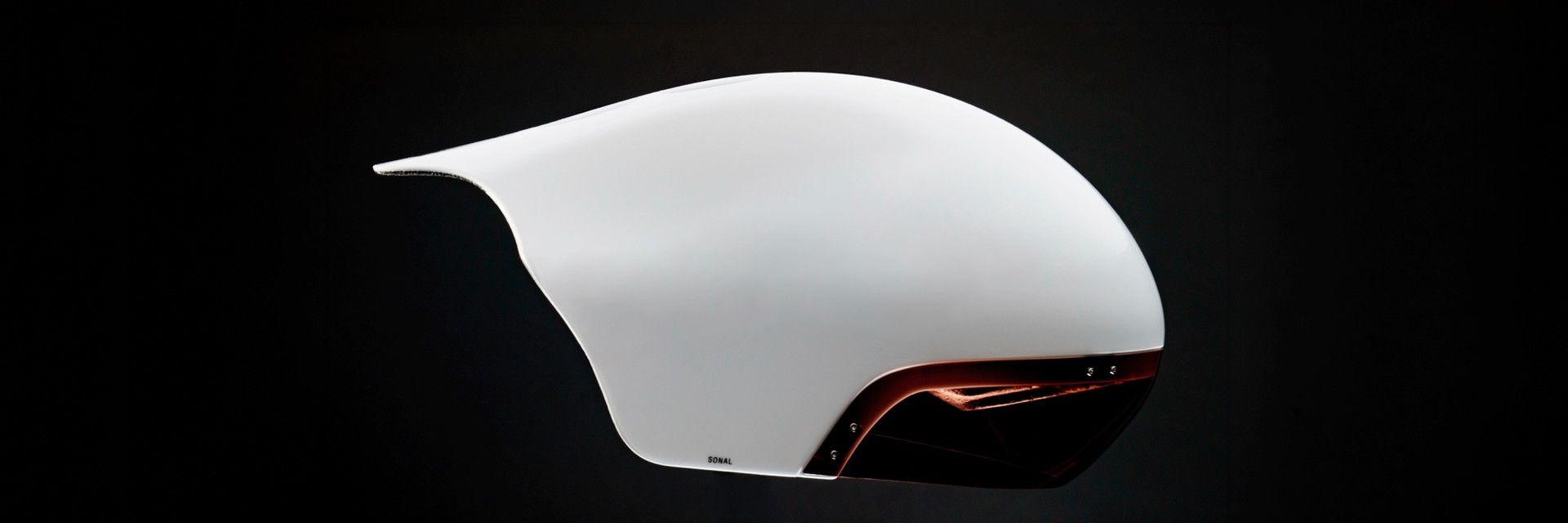
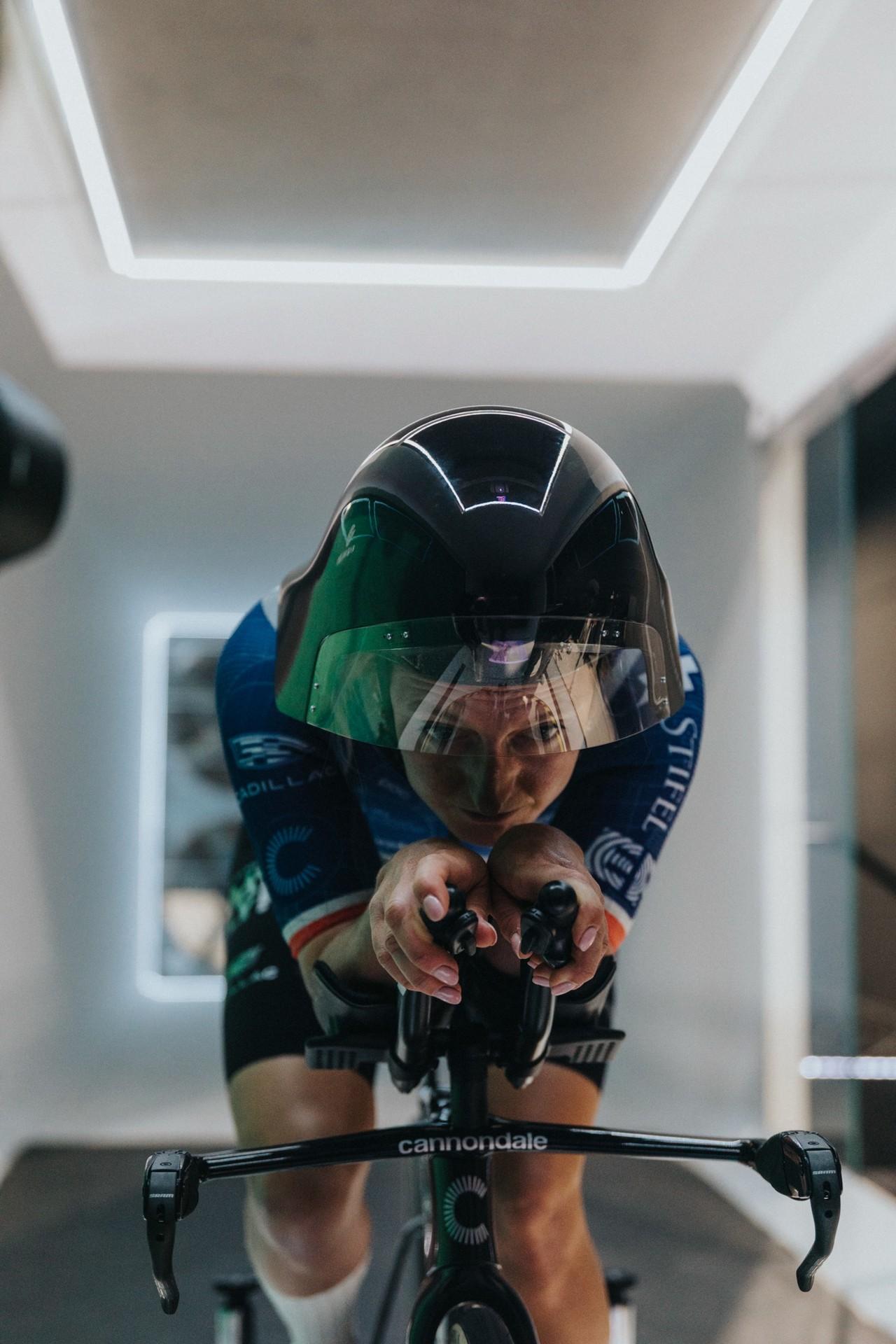
POC has launched the Sonal, a time-trial helmet developed with EF Pro Cycling that matches its external shell width to the rider’s shoulders. The previously unreleased design was seen raced by EF’s men’s and women’s teams at the 2026 Tour de France and Tour de France Femmes before its official launch, though the dramatic design trends in modern helmets meant its outlandish looks almost went unnoticed.
The company claims average savings of 15–20 watts against its existing TT helmets in wind-tunnel testing at 60km/h. Both shell widths produced improvements, POC said, although the gains depend on the individual rider.
The Sonal costs £550 in the UK, making it the most expensive mainstream production cycling helmet on the British market based on our scan of the nearest competitors. For comparison, Giro lists its similarly extreme Aerohead II Mips TT helmet at £514.99.

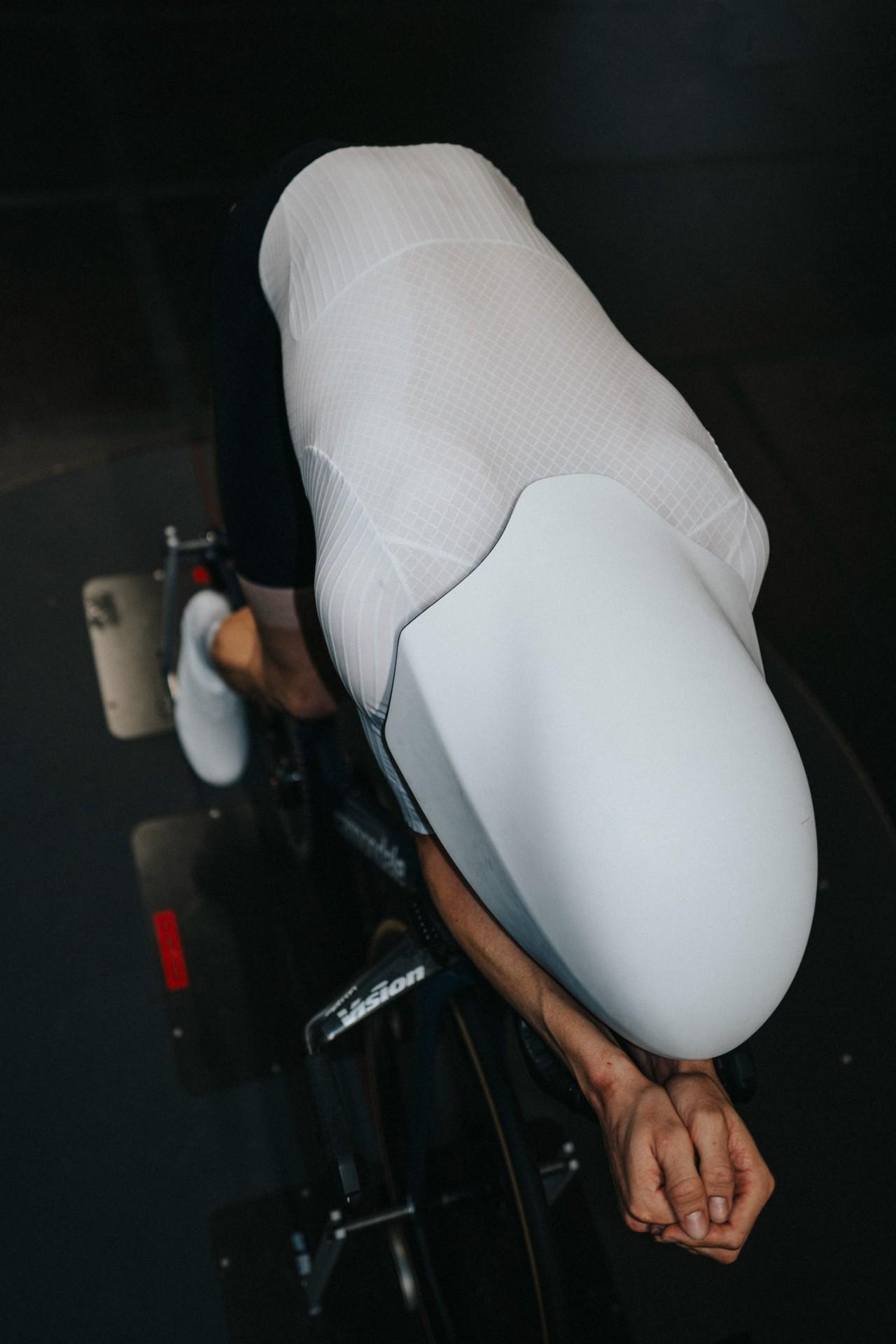
Riders choose between narrow and regular shells by measuring across their outer shoulders while holding their time-trial position. POC recommends the narrow version for shoulders under 37cm wide and the regular for those over 37cm.
Both shells accommodate the same 51–59cm head circumference. The wider version therefore changes the helmet’s aerodynamic relationship with the upper body without providing a larger internal fit. Riders still need to fall within that head-size range, whichever shell suits their shoulders.
POC says the Sonal’s elongated front is designed to manage the high-pressure area ahead of the helmet, guiding airflow around the shell and over the body. It continues the whole-rider approach used for the Tempor, introduced in 2012, while offering a choice of external widths.
EF’s performance team worked with POC through repeated wind-tunnel sessions and development stages, alongside computational fluid dynamics analysis used to assess airflow. Riders’ individual TT positions informed the work.
“We wanted to develop something faster than the Tempor that would benefit even more riders,” said Andreas Klier, EF Pro Cycling’s sports and technical director.
The 15–20-watt figure is POC’s own test claim at 60km/h, rather than an independently established saving. Without rider-by-rider results or a specified baseline helmet for each comparison, it offers a limited guide to what an individual buyer might gain.
Fit, lenses and availability
POC has shaped the forehead section to align with a rider’s line of sight in a full TT position. The company says this allows forward and peripheral vision without requiring head movement or straining to see ahead.
Two Clarity lenses are included, one clear and one tinted. Both attach magnetically so riders can change them to suit the light or weather.
A Boa adjustment system secures the fit, while light padding is intended to reduce pressure points. POC says the helmet is balanced to sit neutrally on the head in a TT position during extended efforts.
Claimed weight, including the lens, is 440g for the narrow shell and 490g for the regular. The Sonal is certified to EN 1078 and CPSC safety standards.
Colour options are Hydrogen White and Uranium Black Matt. Alongside the £550 UK price, POC lists prices of €600 in the eurozone, US$660 in the United States and A$1,000 in Australia.
Both widths will initially be sold in limited quantities through POC’s website in October 2026. Full availability through retail and online partner stores is planned for spring 2027.