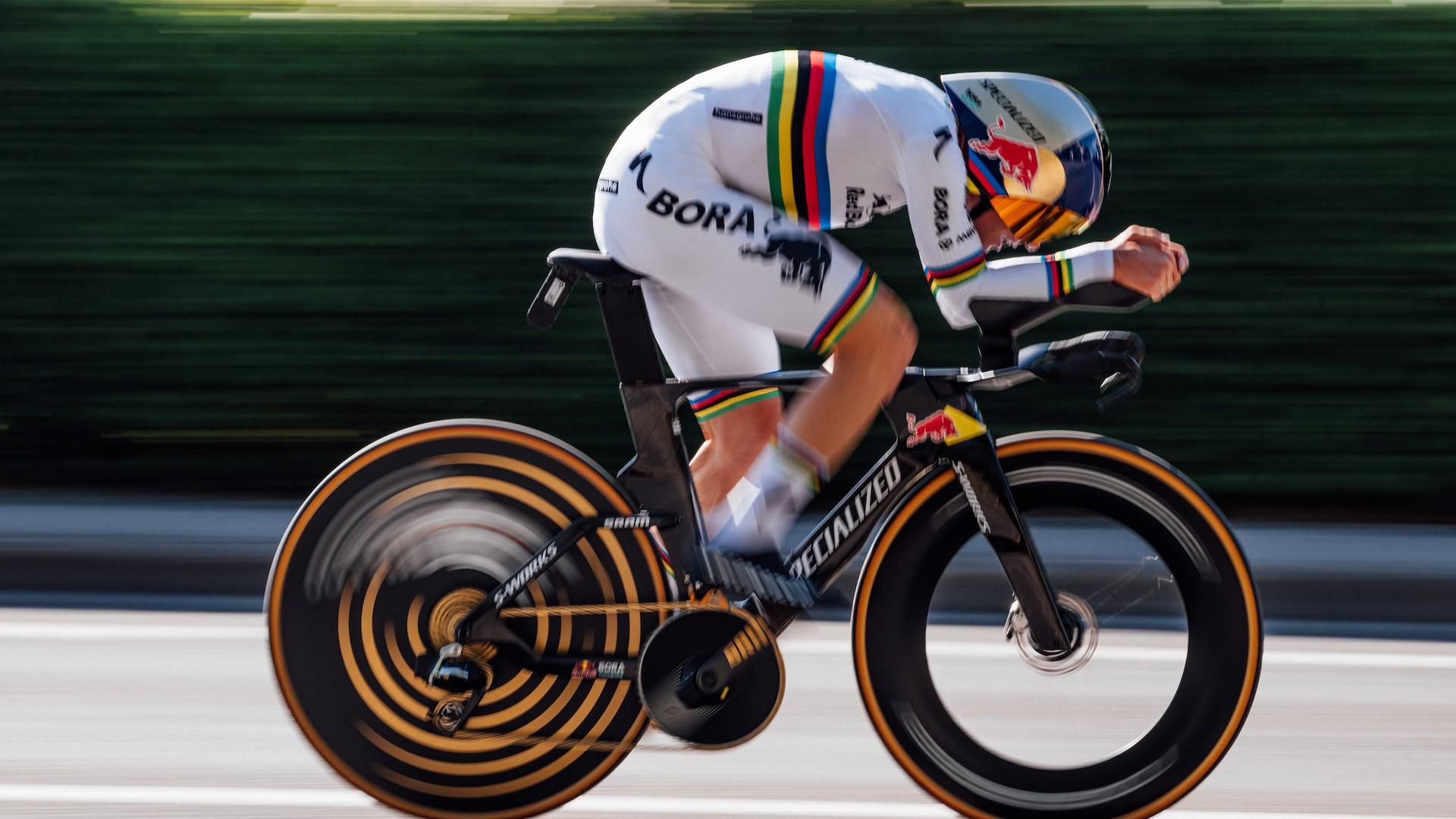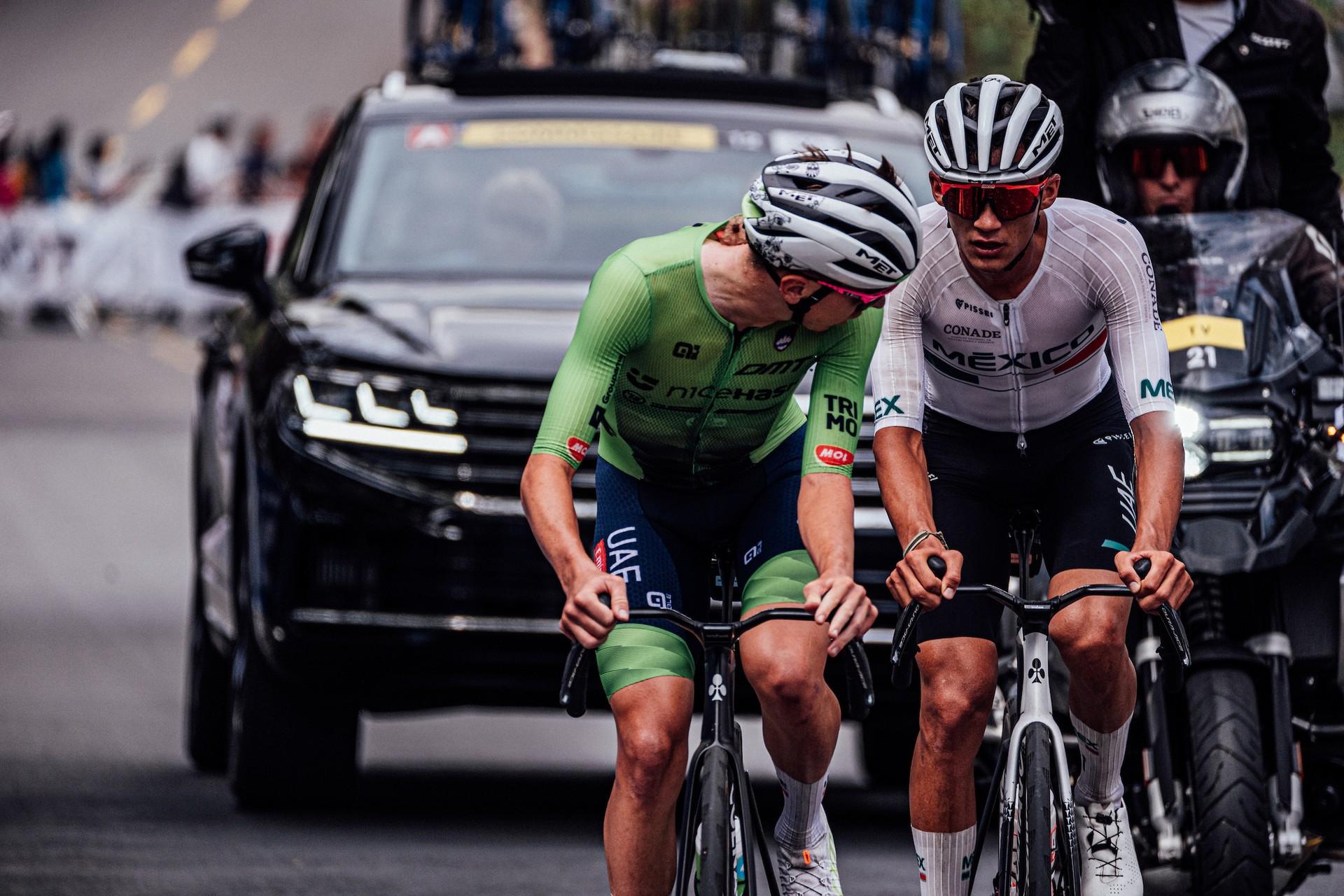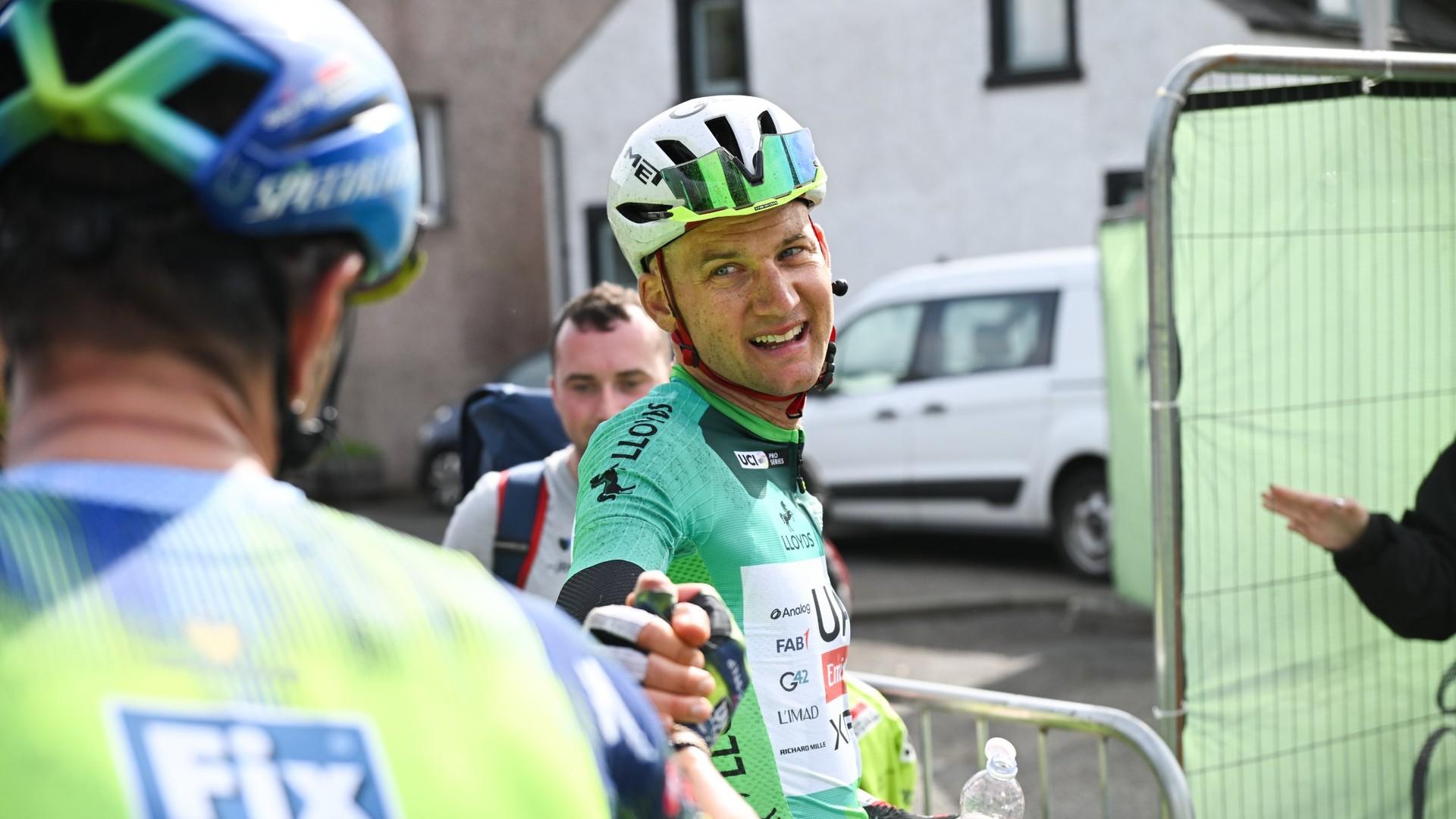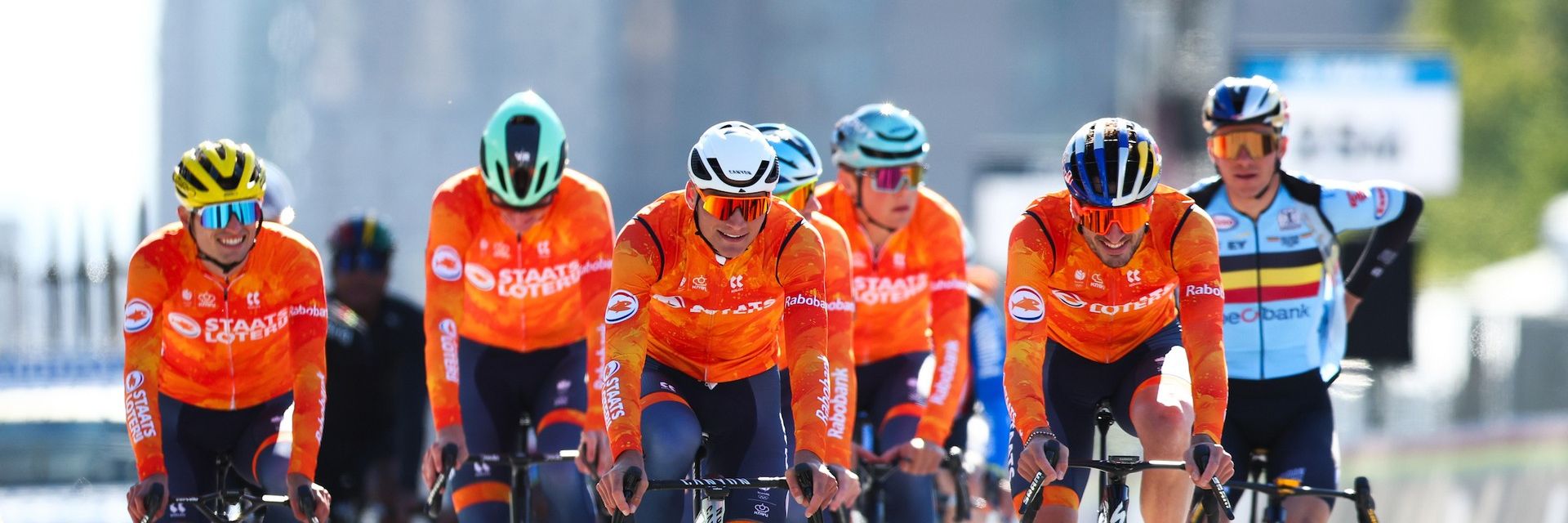
The men’s elite road race on Sunday, September 27, could be one of the most open and aggressive races of the season with some favoured nations potentially lacking the depth to control early moves on the circuit. It could see a rider outside of the main favourites group taking the rainbow jersey if the chase is not cohesive.
Swedish rider Elias Wändel expected the major riders to wait longer before committing themselves in the junior men’s World Championship road race. When they moved, he was too far back. It could be a lesson for Sunday as the riders face the same laps but over a longer distance that could shape the race differently.
“I was simply too far in the back and I just saw the guys ride away from me in the front,” Wändel told Cycling Pro Net.
The pre-race favourite and eventual winner Benjamín Noval (Netcompany INEOS) attacked with 45km to go, bridged to an earlier breakaway with around 30km remaining, then went solo with two laps to go.
With Tadej Pogačar absent through injury, there is no single favourite around whom rivals would organise their responses. Our contenders preview covers the individual opportunities.
Twelve laps create repeated opportunities to split the field
The elite men race 273.7km from Brossard, including 12 laps of the 13.4km Mount Royal circuit, with 3,803m of climbing overall. Voie Camillien-Houde supplies the main climbing effort: 1.67km at an average 7.4%, reaching 10%.
Each circuit lap contains 269m of elevation gain. The shorter, steep Chemin de la Polytechnique offers another place to force a separation, while the rising finish along Avenue du Parc is deceptively steep in itself. It is a constant series of huge efforts to stay well placed and in the fight for the win.
The repetitive nature of the circuit lends itself to a very chaotic and attacking race with the field likely being reduced very quickly once the riders reach the finishing circuit. Favourites will have to spend energy trying to remain well placed throughout instead of sitting in the wheels so they don’t miss the moves as Wändel did in the junior race.
Thursday’s U23 women’s race developed differently. The winning group formed with 31km remaining, after earlier breakaways and a reduction in the peloton. Viktória Chladoňová went clear with Isabella Holmgren and their fellow attacker Fleur Moors.
Holmgren dropped Moors on the final ascent, but Chladoňová stayed with her and won the sprint. Intense and aggressive racing still led to the move going away, albeit the final selection came close to the finish.
Both races covered 134km over ten circuit laps. Sunday’s longer race and elite field could produce a different outcome.
A strong break needs a hesitant chase
A group that goes clear early on the finishing laps could go all the way. Riders such as Ben Healy, Mathias Vacek, Mikkel Frølich Honoré, Santiago Buitrago, Adam Yates, Christian Scaroni and others could all potentially benefit from an early move, especially if the chase isn’t organised well. If riders from a number of key nations make the group, the peloton’s focus will be on the nations that missed it. If they are not willing to work, the break could have a huge opportunity.
In the men’s junior road race, the early break shaped the contest. French rider Lancelot Gayant was in that group when his teammate Simon Defrance and Noval reached it. Once Noval went clear, Gayant and Defrance chased together before Defrance rode on alone to take silver.
If an early move goes clear after the peloton has started to be whittled down, second-group syndrome could set in: riders want the gap closed but are unwilling to spend the energy, expecting others to pull through. The gap to the leaders could then balloon.
There is a recent example in Québec’s stalled pursuit. The favourites let Remco Evenepoel join a break with 27km to go, then failed to organise a sustained chase. Paul Seixas and Tom Pidcock tried to close the gap, but the pursuit stalled as riders looked to one another. Evenepoel went on to beat Giulio Ciccone in a two-up sprint.
The Worlds course is much harder, but the same hesitation could matter: a rider may try to close the gap, then flick an elbow for fellow chasers to take a turn, only for cohesion to falter.
Wandel’s experience also shows that the chase can recover. He described the growing gap as leaving him “kind of panicking back there in the group”, before committed pacing brought riders ahead back within reach. He ultimately sprinted for bronze, 2:12 behind Noval.