Luke Rowe has predicted rising security pressures and costs will push more road races towards finishing circuits and repeated loops, reducing the amount of unique road organisers must protect.
“Long term, I think inevitably we're going to be racing more circuits,” Rowe told Velora. “It doesn't have to be tiny laps, but I think that's the way to make it a bit more safe.”
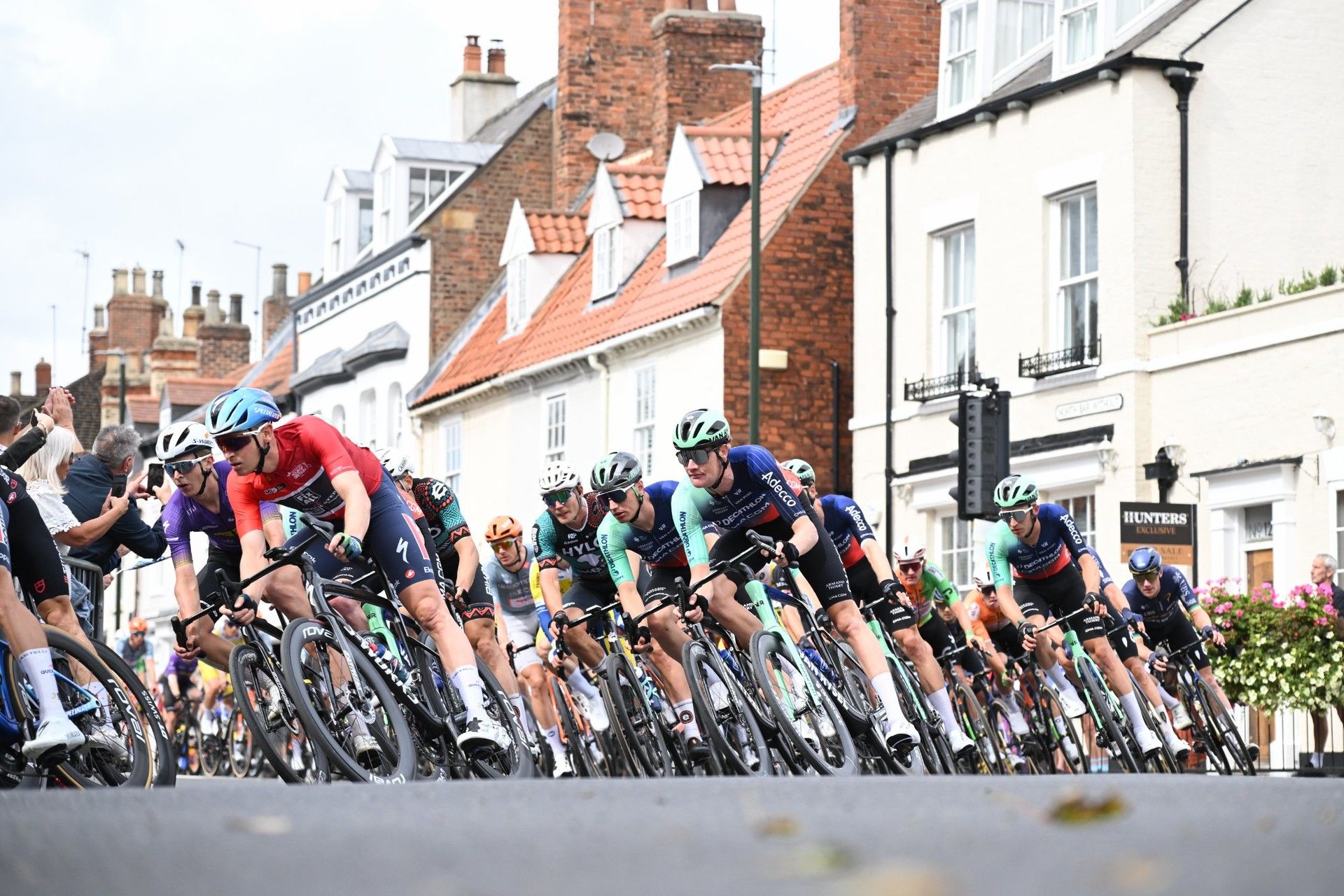
This takes road racing away from the traditional point-to-point races but it does mean that organisers can spend less on safety measures while actually securing greater certainty around rider safety. A 200km road race from one place to another is very hard to police, with several junctions, driveways, hazards and possible entry points, whereas a circuit can be managed far more easily.
Rowe set the idea with a 200km race split between an opening point-to-point section and a finishing circuit. “Even if you do 100k point to point and four local laps of 25k, you do 125k of road to secure instead of 200,” he said. “I think that's going to be the future.”
He also proposed using larger loops rather than short criterium-style laps. “You could do four laps of 50k and you've only got to cover 50k of road essentially,” Rowe said. “So you minimise the amount of junctions and houses you're passing. I think that's the future. It doesn't have to be tiny laps, but I think that's the way to make it a bit more safe.”
Circuits offer an alternative to larger security operations
“You can,” Rowe said of stopping vehicles from entering a race route from their driveways. “It just takes more people. It just takes a lot more police presence and planning.” However, this requires much more spending power from organisers. “Obviously the smaller races have less financial access to having more people on the ground to secure things,” Rowe said.
“Everything's getting more expensive,” he added. “We shouldn't get in a situation where we're just bashing race organisers. A lot of them, they do it out of the love of the sport. It's not necessarily a financial gain, so they're doing everything they can.”
More police and marshals would allow organisers to control more junctions and driveways without changing the race route, but the money needed to do that, especially in countries like the UK, is extremely high. Therefore, reducing races to laps, whether 20km or 75km, just makes life easier for everyone involved with the potential for reducing charges for policing, traffic management, permits and staffing.
British Cycling has previously identified police charges and traffic-management obligations as barriers for road race organisers in Britain. A UK government document also described trials using trained volunteer marshals to manage traffic, reducing costs and pressure on police resources. Each location still required assessment, however, and responsibility for the route remained with the organiser.
Repeated sections do not provide complete protection. Every side road and property on a circuit must remain controlled during each lap, sometimes for longer than a rolling closure on a point-to-point route. On September 4, Louis Leidert (Lidl-Trek Future Racing) encountered two cars during the Sauerlandrundfahrt time trial, despite its course measuring only about 14km.
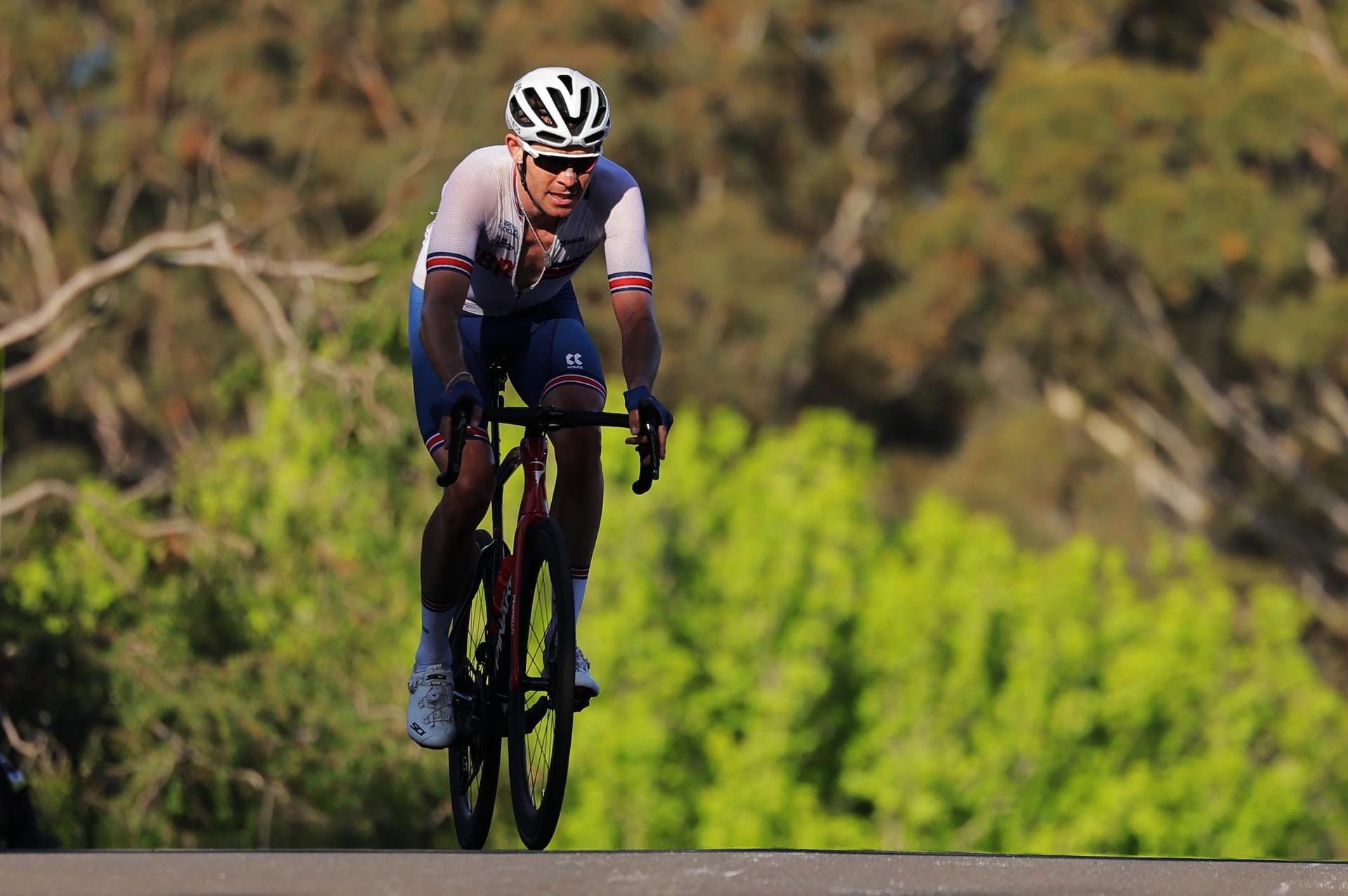
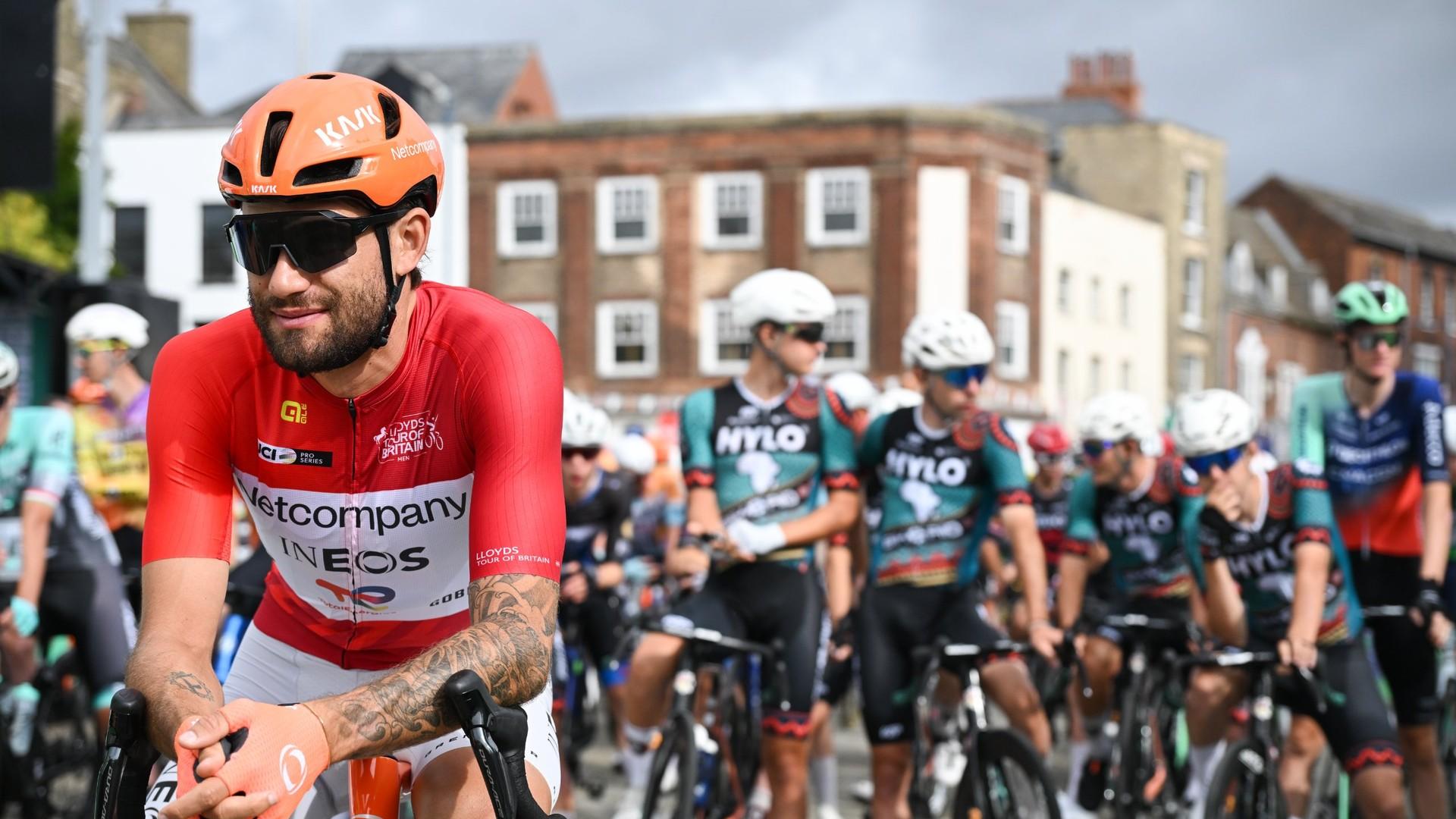
Luke Rowe racing at the World Championships in 2022 - Alex Whitehead/SWpix.com
The safety debate returned to the forefront after the death of 19-year-old Finlay Tarling, who collided with a non-race vehicle during stage eight of the Volta a Portugal on August 14. Portuguese police said the car entered at a location without officers after Tarling had become separated behind the peloton and its rolling security enclosure. The UCI has since proposed expanding live GPS safety tracking across professional racing.
“It's obviously a sensitive subject at the moment,” Rowe said. “Obviously, with Fin (Tarling), that was gut-wrenching, to be honest.”
The Tour de France shows what larger budgets can secure
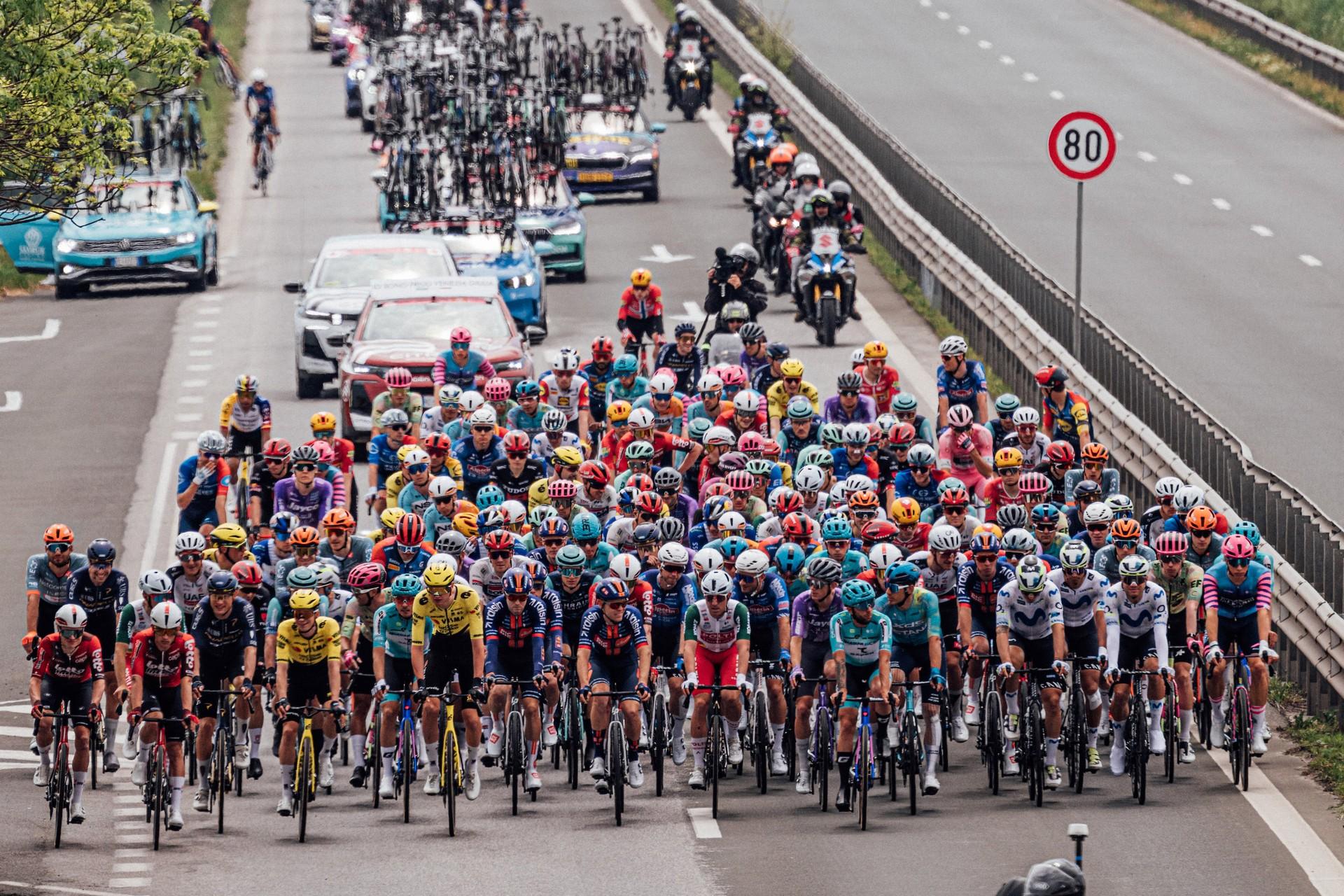
Some races, such as the Tour de France, are still able to use classic routes without the need for lots of finishing circuits. “The bigger the race, the more controlled it is,” Rowe said. “Tour de France, there's not a car on the track for 3,500k.”
At the 2026 Tour, the published safety operation involved 28,000 law-enforcement and emergency personnel, 300 officers attached to the event on a permanent basis and about 3,000 departmental council agents. They covered a 3,333km route across 21 stages.
At the Tour, the entire route is closed to all non-race vehicles hours before racing begins with barriers and gendarmes placed at every access point along the roads used. That level of control allows the event to travel between regions and preserve the changing terrain, roadside scenery and host communities central to its format. But it costs a huge amount of money to achieve.
Using more circuits in the future would probably be more beneficial for the sport, even away from the safety aspect. Having multiple laps is great for crowds who gather to see the finish or out at key climbs of bottlenecks on the route. Circuits allow those fans to see the riders multiple times, something the road races in the world championships have been doing for many years.
This has been a trend in the sport for the last few years anyway, but with more and more pressure being applied on organisers and the UCI by riders, teams and fans of the sport to secure rider’s safety it’s possible to imagine a future where some races are just a week of circuits around a start/finish location. That is by no means a bad thing, some of the most entertaining races are on laps. And, if that means safety can also be more certain than a point-to-point, then is there really a downside?