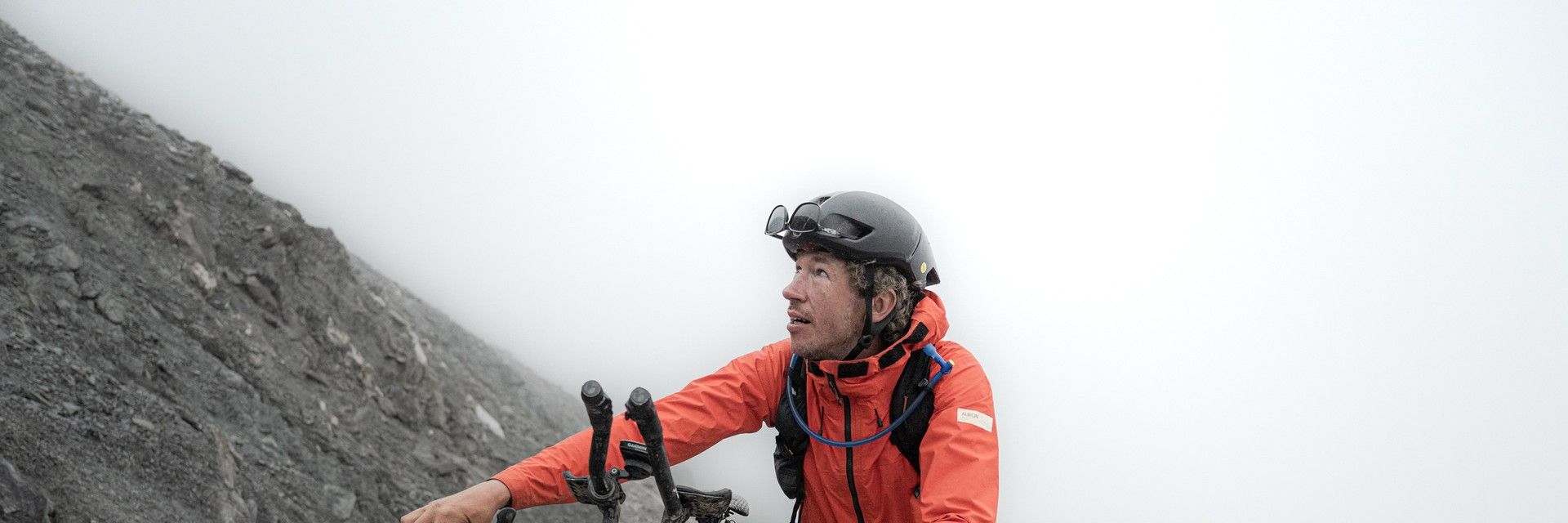
Across 2,052km of Kyrgyzstan’s Tian Shan mountains, Justinas Leveika endured temperatures approaching 40°C, high-altitude storms and vast remote stretches to win the 2026 Silk Road Mountain Race.
Leveika reached Cholpon Ata alone at 01:56 on Sunday, August 23, after 7 days, 16 hours and 56 minutes of racing. He had climbed approximately 35,362 metres on a largely gravel and singletrack route where riders carry their own shelter, find their own food and water, and the clock keeps running across sleep and bike repairs.
For those unfamiliar with the Silk Road Mountain Race, it sits at the extreme end of ultra-endurance cycling. Even its 2,052km distance undersells the challenge as brutally rough terrain and high mountain passes force riders into long stretches of pushing or carrying their bikes. I covered the race in depth for Cyclist magazine in 2018, and the stories of self-supported riders battling illness, injury and unforgiving tracks have stayed with me ever since.
This year’s race was no departure from that, and offered a charged battle for the top spot. Leveika trailed Omar Martinello by 4 hours and 24 minutes at the first checkpoint, where he was outside the leading group and appeared to be struggling. DotWatcher’s account of the race is the very best and details the full chronology of the leadership battle, and well worth investing in a subscription to follow for ultra-endurance races across the world. By the finish on the northern shore of Lake Issyk-Kul, he was roughly a day clear of second place.
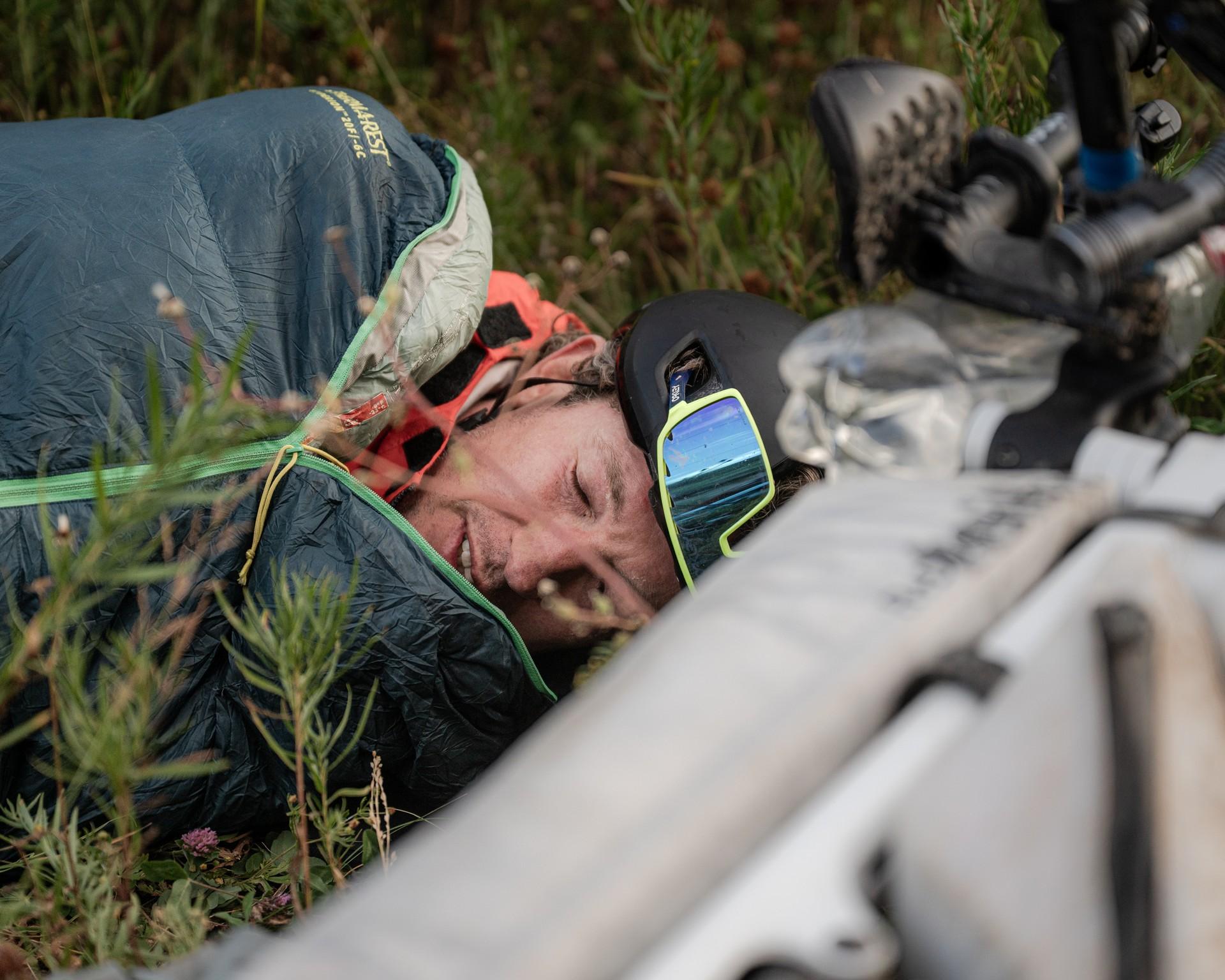
Before the August 15 start, Leveika had played down his condition after arriving without altitude preparation and following a cold spell in Norway. “When there is not much fitness then you are forced to race smart, but I haven't done that for a while,” he wrote on Instagram.
The opening heat caused exhaustion across the field, with pre-race women’s favourite Cynthia Carson and Angus Young later withdrawing following heat and sickness. Leveika initially rode around the edge of the top 10 before transforming the race between its first two checkpoints.
Leveika takes control beyond CP1
The race reversed in the 500km stretch between CP1 and CP2. When Leveika reached the second checkpoint at Kel Suu, 1,045km into the route, he was the first rider to receive a stamp there and arrived two hours before the organisers’ initial estimate.
Leveika had finished third at the 2023 Silk Road Mountain Race, and his response on returning to CP2 was brief: “been here before.” This time he slept for several hours before leaving along the Old Soviet Road.
He then rode from CP2 to CP3 without stopping and built an advantage estimated at 100km. The chasing riders could not recover that distance as fatigue and mechanical problems accumulated through the closing sections.
Leveika continued extending his advantage after CP3 and reached the northern shore of Lake Issyk-Kul alone, securing victory of around one day over second place, from a field that had started with more than 230 riders.
The unsupported race required competitors to manage their own food, water, sleep and repairs while the clock continued running. Its 2026 route included approximately 35,362 metres of climbing, remote stretches of more than 100km without resupply and high passes where riders had to push or carry their bikes.
Nathalie Schneitter won the women’s race in 9 days, 15 hours and 51 minutes, finishing 10th overall. She had trailed Kerry MacPhee by several hours until roughly 1,655km into the race, but closed the gap around the hike-a-bike over Ukok Pass and moved ahead when MacPhee stopped to rest in Kochkor.
With altitude, conditions changed sharply: riders encountered rain, hail, snow and deep mud in the Burkhan Valley after the severe heat of the opening days. Mandatory equipment included individual shelter and a sleep system suitable for temperatures down to -15°C.
Photo credits: Nils Laengner/ @nils_laengner