While WorldTour management companies spend months agonising over pitches and commercial agreements to secure team funding, tech founder and online creator Leah Winberg, known as Winny, just bypassed the corporate playbook entirely and raised $5,125 in 15 hours by selling advertising space on her future race setup.
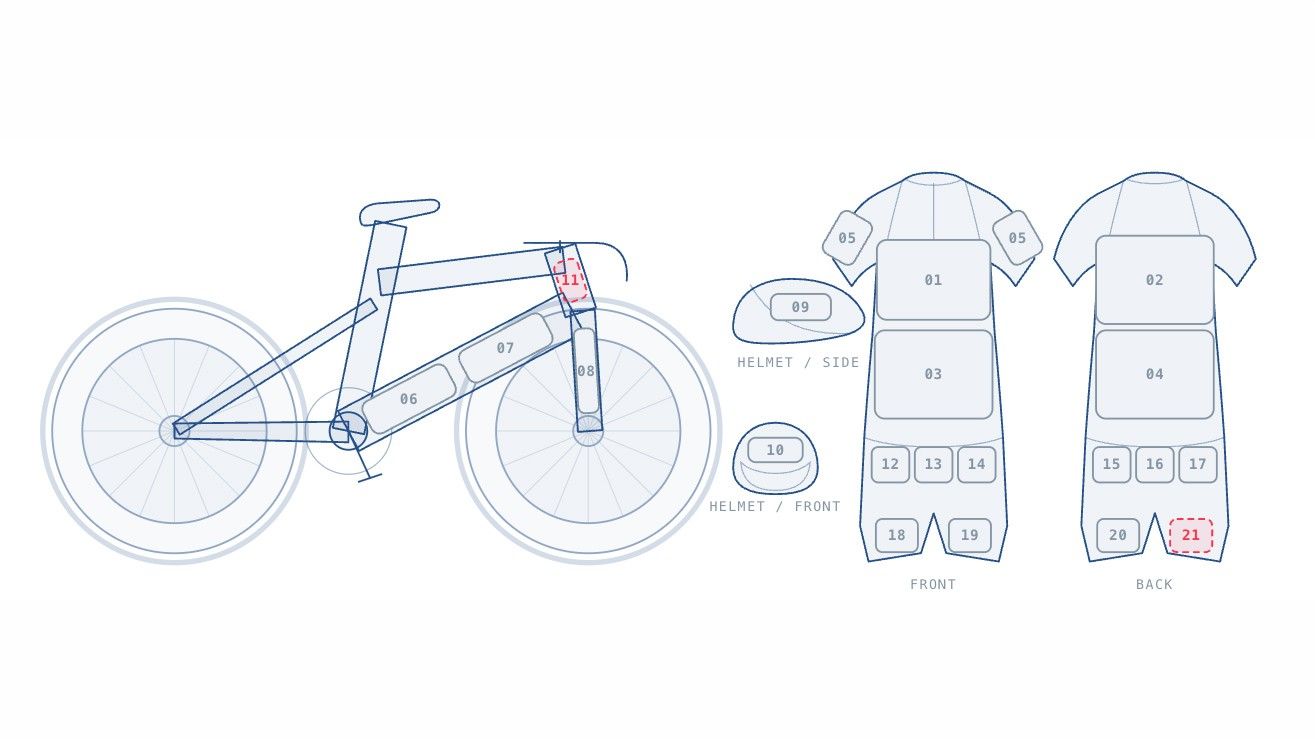
Winberg, who is CEO of Chipped Social alongside a handful of other tech ventures, had sold almost all 21 positions at the time of writing Thursday, August 27. The placements cover her race suit and equipment, with prices varying by size and location and the cheapest entry set at $125.
“I signed up for an Ironman but i don't own a bike lol,” Winberg said in her launch post on August 26. “so I'm selling ad space”.
The project, called Negative Split, packages sponsorship as a self-service online purchase. Brands choose an available position, pay by card and submit artwork, without sales calls or a pitch deck. The placement is marked as sold when payment clears.
The website uses SVG diagrams to show the available areas of the bike and kit, including whether each placement covers one or both sides. The bike’s unconventional proportions may raise a smile among seasoned cyclists, and we expect may be an artefact of an AI coding tool.
Despite resembling a sponsorship auction board, the positions are sold at fixed prices rather than awarded to the highest bidder.
What sponsors receive
The race suit carries four large panels, divided between two front positions and two on the back. Each is sold independently because the front and rear cannot appear in the same photograph.
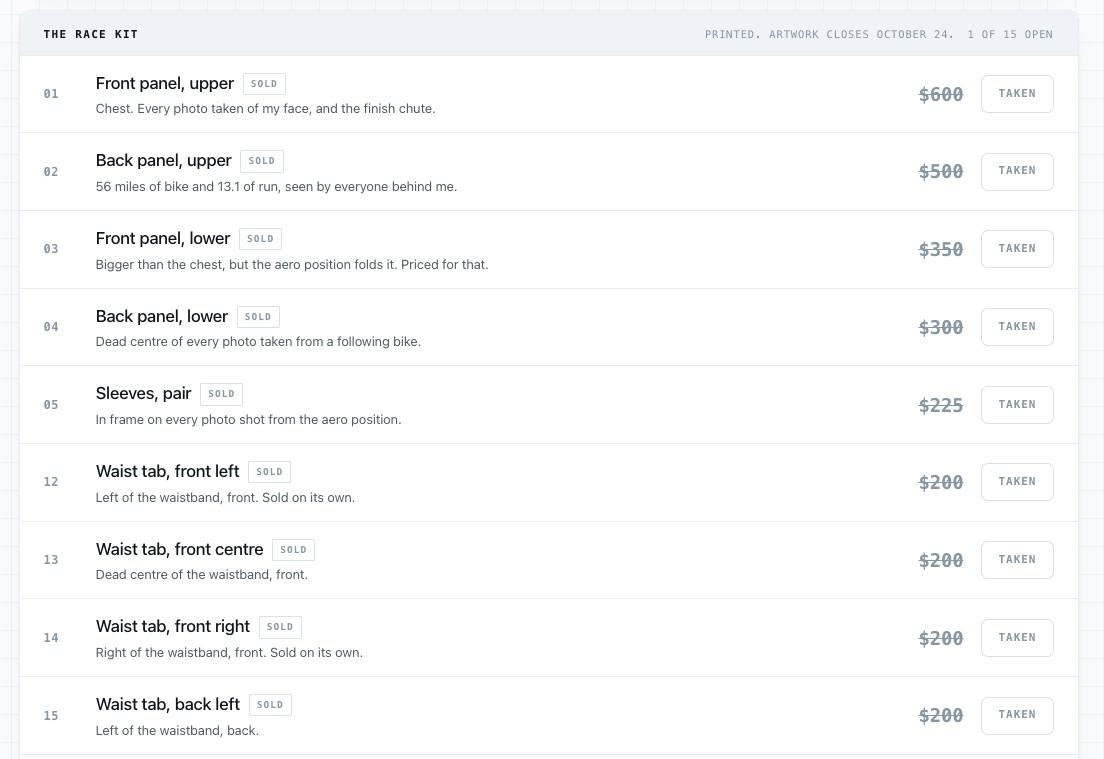
The sold advertising panels in display on Winberg’s website
Frame placements work differently. A buyer owns both sides of the selected tube, with the same logo applied to the drive side and non-drive side. Winberg excluded surfaces that she considers too narrow, curved or obscured to produce useful photographs. Wheels are also absent because she has not chosen them yet.
Kit graphics will be printed into the suit, while the frame and helmet are fitted with vinyl intended for outdoor use, applied by Winberg. Buyers receive an artwork proof, a photograph during training, race-day images and a mention in a post-race report pitched as reaching about 29,000 people.
She had set sales to close on October 24, allowing approximately four weeks for printing and delivery, but with little inventory was left after the opening 15 hours it doesn’t seem like that deadline will have much practical impact.
Winberg has set restrictions covering gambling, adult websites, multi-level marketing businesses, supplements that make medical claims and tokens requiring disclaimers – that’s arguably a slight step above pro cycling where some gambling companies support WorldTour teams. Cryptocurrency companies are permitted, reflecting her eight years working in that sector, but she reserves the right to reject and refund any purchase.
The campaign begins with Ironman 70.3 La Quinta in California on December 6. Its 70.3 miles comprise a 1.2-mile swim followed by 56 miles on the bike, before a 13.1-mile run. Winberg then plans to contest a full Ironman in the second quarter of 2027.
With the lack of a bike at the time of fundraising, the journey to completion of the full Ironman will likely require a considerable amount of training.
Her website estimates about 1,400 training miles before December's race, while the launch post promises sponsors more than 1,500 miles of exposure across the wider campaign.
Whether click-to-buy sponsorship catches on elsewhere remains to be seen. For now, Winberg has achieved the distinctly quasi-professional feat of securing the sponsors before securing the bike.