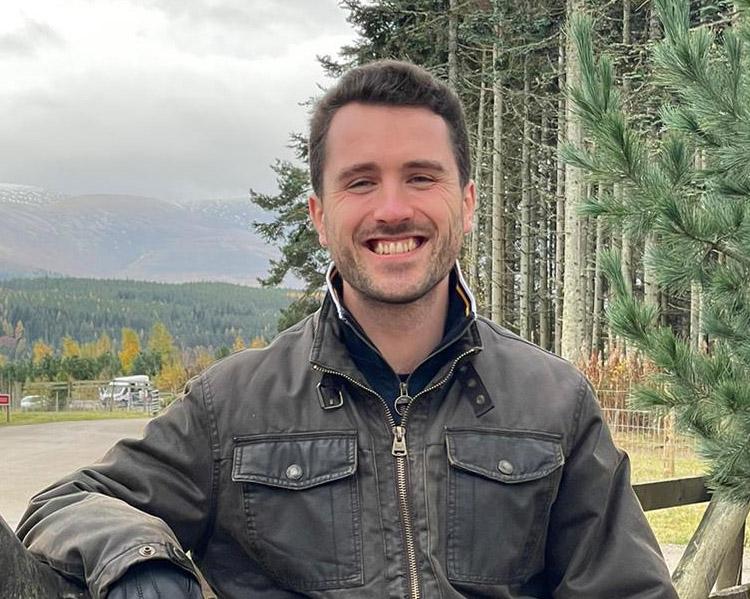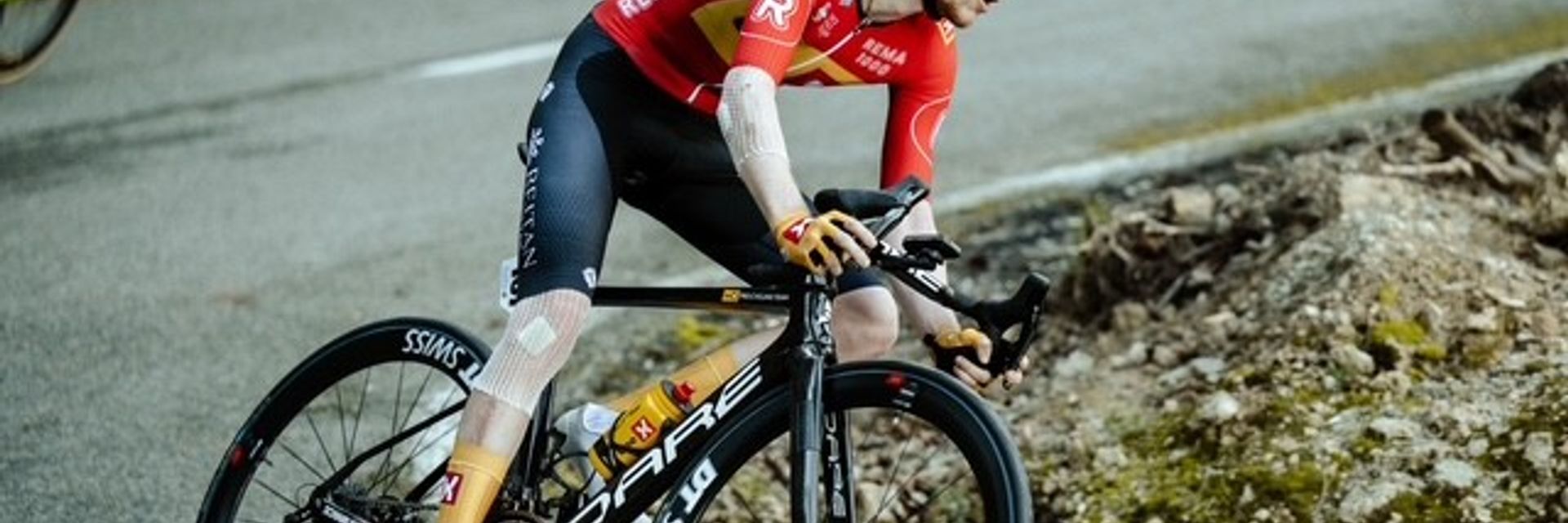
Magnus Kulset (Team Ringerike) is the current Zwift Everesting world record holder, having climbed the challenge’s required 8,848m in about four hours and 50 minutes in October. But repeating a virtual hill is only one part of a cycling life that now combines the search for another top-level racing opportunity with economics studies and a love of seeing how much he can improve.
In an interview with Velora, Kulset discusses life after Uno-X Mobility, the scrutiny surrounding his family’s links to the team, and his recovery from a serious crash as a junior. Enjoyment remains central to his training, whether he is watching lectures during an easy Zwift ride or testing his limits uphill. His next ambition is to attempt the outdoor Everesting world record next year.
“I'd like to do an Everest next year, hopefully then I'll take the world record. Would be cool,” Kulset told Velora. “Just add it to my resume there.”
Kulset’s latest ride is a new Zwift world record. The figures he supplied show 35 climbing efforts of approximately seven minutes at 325W, or 5.65W/kg, repeated until he had accumulated the challenge’s required 8,848m of elevation.
“I remember talking with my friends when I started cycling, like how it would be so difficult to do Everest,” Kulset said, but in his first years on the bike he didn’t attempt it.
Everest, one hill at a time
Familiar ground
A climb most riders know by sight: Mont Ventoux, summit 1,910m above sea level.
Same scale
Everest’s summit stands 8,849m above sea level, more than four and a half Ventoux high.
Height is not the test
Those are summit heights. An Everesting asks for 8,848m of climbing, added up over and over on one hill.
One hill, again and again
On Zwift the mountain becomes a rhythm: 35 hard efforts, each followed by a short roll back down.
One repeat
Each lap is a short, hard climb, then a breather on the way down.
The whole ride
About 4h 50m
35 repeats, 8,848m of climbing
Climbing efforts
325W 5.65W/kg
Whole ride, descents included
277W 4.83W/kg
With more riding, his view of the challenge changed: “I've realised it's actually doable,” he said.
“I like riding uphill and it's what I'm best at, so it also gives me the feeling of accomplishment when I do it,” he continued. “It is ridiculously hard in every way, so it's not something I'd recommend.”
Kulset manages the repetition by concentrating on one ascent at a time. Each climb demands six or seven minutes of attention, followed by roughly a minute to a minute and a half of easy descending before the next begins.
“I try and keep myself entertained with the idea of it just being one effort,” he said. “To not feel like, oh, I still have to do this 30 or 40 more times because then it's just so long.”
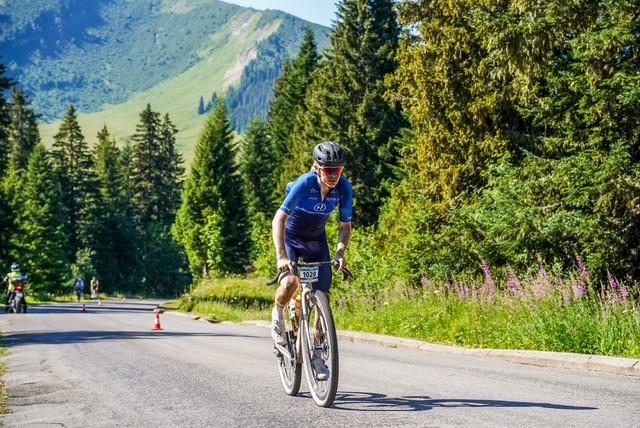
“Luckily I've done it a couple times before, so I sort of know how rough it's gonna be,” he said. “But then again, you never know how you feel.”
The whole effort averaged 277W, or 4.83W/kg, with a normalised power of 304W, or 5.3W/kg. The gap between the climbing power and the overall average reflects a challenge that alternates hard ascents with descents on which he can stop pedalling.
A virtual Everesting requires riders to repeat the same hill and descend by the same road, completing the elevation target in one effort without sleep. Meal and rest breaks count towards the elapsed finishing time. Kulset rounds the target up to 9,000m when thinking about it, because he finds that easier to work with.
“To me, it's not realistic because it feels like a video game,” Kulset said. That is part of its appeal: platforms using real-road footage are “not very interesting to me”.
Kulset references the videos he posts online that show he spends a lot of his time out of the saddle, but on Zwift he doesn’t incur the aerodynamic penalty he would outdoors. “Power output is more or less the same for me. I still do a bit more power outside,” he said. “The power is great and the power would be great outside as well, but it's even faster when it's in Zwift since I don't have to care about being aerodynamic or staying seated.”
Indoors, the bike can remain stationary while his avatar rolls downhill. Outdoors, every return to the bottom requires attention as well as time.
“I can just stop pedalling basically, and then I just roll, which is mentally and physically a lot easier than doing it outside where you have to care about traffic, cars, braking,” he said. “I would say an Everest is easier on Zwift, but then just riding uphill, I still prefer riding outside.”
Ronan McLaughlin’s outdoor benchmark is 6:40:54, set on Mamore Gap in Ireland in March 2021. His chosen segment was 810m long, gaining 117m at an average gradient of 14.2%. He completed 78 laps.
Kulset would prefer a climb that also has a steep ascent, but with the road as straight as possible, mainly to avoid braking on the downhill. Efficient descending is almost as important as fast climbing.
“Normally I think 15% would be ideal because then you still have an okay speed,” he said. “Then you need good surface for the downhill. That's important. It should be just straight road because then you can get quite fast.”
But going up to the equivalent of Everest on a bike once isn’t quite enough for Kulset. On Zwift, people have pointed out that, after completing a quarter, half, full and even a double Everesting challenge, he should now focus on testing himself further and look towards a virtual triple Everesting challenge. He also wants to challenge famous KOMs on some of the biggest climbs in Europe.
“All the big climbs in Europe, France, Italy, Spain, would be cool to give it a shot and see if I'm good enough to beat some of the pro records,” he said. “Or just see where I'm standing.”
Former professional Phil Gaimon has pursued climbing records after his racing career, including a Mauna Kea ascent with 4,307m of climbing in January. Kulset, however, still wants an opportunity to put his climbing ability to use in top-level racing.
Leaving Uno-X and looking for another opportunity
Kulset was with the Uno-X squad from 2021 to 2025, spending the first two years in the development squad before stepping up to the senior squad in 2023. His final season was 2025; the team’s promotion to the WorldTour was the main reason his contract was not extended.
 Photo: Szymon Gruchalski
He recalls talking to the team manager midway through that last season and being told that the team’s requirements were changing. His contribution had been valued, but his numbers and what he could offer were not what Uno-X wanted for its next step.
“It's been great, but it's not what we're looking for moving forward,” Kulset recalled being told. “It sucked,” Kulset said. “But like, it's just cycling. If you're good enough, you're good enough,” he said. “I wasn't good enough to get renewed.”
His father, Vegar Kulset, is CEO of the sponsoring Uno-X Mobility business. His brothers have also raced within the organisation, including Johannes Kulset. Those connections brought scrutiny to Magnus’s place in the squad before his eventual departure.
When he received a renewed contract in late October 2024, cycling expert Magnus Drivenes questioned the decision. “It is quite easy to understand why it is like that, considering whose son he is,” Drivenes told TV 2.
Kulset regards the frank explanation for his departure as important in that context.
“People can say what they want in regards to how my family is involved with my brother and dad,” he said. “I was told that I wasn't good enough. It's just fair and square deal instead of pretending like it was anything else.”
He rode two UCI Gravel World Series races for Continental-level Team Ringerike in 2026, finishing 17th and 19th. He continues to look for a higher-level opportunity but understands why strong training numbers alone have not secured one: teams can choose climbers with a stronger record of delivering results.
“They're going to be more focused on someone who can show that they had great results in the past rather than trying out someone who has really good numbers in training but have a limited amount of results, apart from some pretty okay under-23 races,” he said.
Kulset also believes the number of teams folding has reduced the available places for a pure climber. His under-23 performances carry less weight now that he has completed several professional seasons without matching them in results.
Sometimes a language barrier can also stand in riders’ way. This isn’t an issue for Kulset, though. He can, of course, speak Norwegian and can make himself understood and hold a conversation with Swedish and Danish speakers. Also, with his wife and fellow cyclist Charlotte Broughton Kulset being from the UK, he speaks more English than Norwegian these days. As well as that, he is fluent in Spanish and “pretty fluent” in Italian.
“I'm happy to go with any team and ride any place,” he said. “It has to work.”
Finding time, and enjoying the improvement
It isn’t just cycling that fills his time, though. Kulset is studying economics, another great passion of his. He generally studies for a couple of hours after waking, rides, has lunch, then returns to his coursework. Some days include a second ride, with more studying fitted around it.
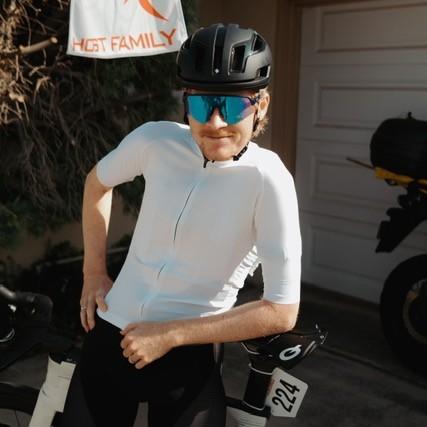
Easy indoor sessions offer another option: he can watch lectures while riding on Zwift.
“I don't think I would find the time to study and ride if I didn't enjoy it,” he said.
Kulset’s own training and schoolwork were interrupted much more seriously by a crash involving a car in June 2018. He suffered a skull fracture and says he remembers neither the collision nor the first couple of weeks afterwards.
He spent approximately a month and a half in hospital and experienced memory difficulties during the following weeks. One uncomfortable recollection is of seeing a flag and being unable to remember what it was called. His second season as a junior included little racing while he gradually rebuilt his training.
Doctors could not guarantee how his recovery would develop. Kulset says he now feels fully functional, and remains grateful for the support that allowed him to return at his own pace.
“I really appreciate the help I got from my school back then, who gave me the time to get back into schoolwork, not forcing me to do anything,” he said.
His coach allowed him time to build back towards training, while his family helped throughout the recovery.
“My family have been so supportive, helping me with everything all the time,” he said. “I feel really lucky.”
Kulset’s interest in training today centres on enjoyment and discovering how much he can improve. He likes racing, riding his bike and cross-country skiing in winter. He also enjoys combining his love of riding and his love of numbers which push him on to continue improving.
“So I can do 2 watts more than last time and then just calculate for myself how much of a difference that makes,” he said. “And that just makes me really entertained with it.
“It makes me enjoy it.”