Czechia is the latest nation to throw its hat into the ring for a Tour de France Grand Départ in 2029 with a budgeting plan set at 550–750 million Czech crowns, roughly €22–30 million. The idea is to start in the capital of Prague before heading through central and southern Bohemia. However, they can’t put in their application until the Czech government gives it the funding green light.
Přemysl Novák, head of L'Etape Czech Republic and leader of the working group preparing the bid, told Sport.cz that the application could cover 2029 or a later edition.
"I cannot say whether it is realistic for it to happen as early as 2029," he said.
Tour organiser ASO sent the working group its detailed hosting requirements at the end of June, which allowed the budget to be calculated. The organiser is expected to assess the project later this year, with a decision due in spring 2027.
Novák designed the three stages with Roman Kreuziger, the former Czech professional who started the Tour ten times. The opening day is a 188km classics-style loop that starts in Old Town Square, heads out past the castles at Karlštejn and Křivoklát, takes in the Řevničák climb and returns to finish in Prague's historic centre. Stage 2 is a 208km run from Tábor to České Budějovice, via Bechyně, the Česká Kanada area and Hluboká, intended for the sprinters. The third stage climbs into the Šumava, starting in the centre of Český Krumlov and passing Rožmberk castle, the monastery at Vyšší Brod, Prachatice and Vimperk before finishing in Kvilda after 174km.
Proposed Czech Grand Départ stages
Working group's proposal for the opening stages of the Tour de France

| 1 | 2 | 3 | |
|---|---|---|---|
| Route | Prague–Prague | Tábor–České Budějovice | Český Krumlov–Kvilda |
| Distance | 188km | 208km | 174km |
| Profile | Classics-style loop from Old Town Square, past Karlštejn and Křivoklát castles, over the Řevničák climb | Sprint stage via Bechyně, Česká Kanada and Hluboká | Climbing stage into the Šumava via Rožmberk, Vyšší Brod, Prachatice and Vimperk |
Stage | Route | Distance | Profile |
|---|---|---|---|
| 1 | Prague–Prague | 188km | Classics-style loop from Old Town Square, past Karlštejn and Křivoklát castles, over the Řevničák climb |
| 2 | Tábor–České Budějovice | 208km | Sprint stage via Bechyně, Česká Kanada and Hluboká |
| 3 | Český Krumlov–Kvilda | 174km | Climbing stage into the Šumava via Rožmberk, Vyšší Brod, Prachatice and Vimperk |
After the third stage the group proposes that the race continues on land and rides out of southern Bohemia and into Western Germany with the race then heading into France on stage 5 instead of flying to France. This is something ASO have agreed to before but would add an extra layer of difficulty as German authorities would also need to sign it off.
Tour director Christian Prudhomme has inspected the routes by helicopter. Sport.cz described his response as enthusiastic, but he raised concerns about whether the regions have enough accommodation for the race's travelling contingent. Novák put that contingent at around 4,500 people, adding that spending on their accommodation would return a large part of the licence fee to the country.
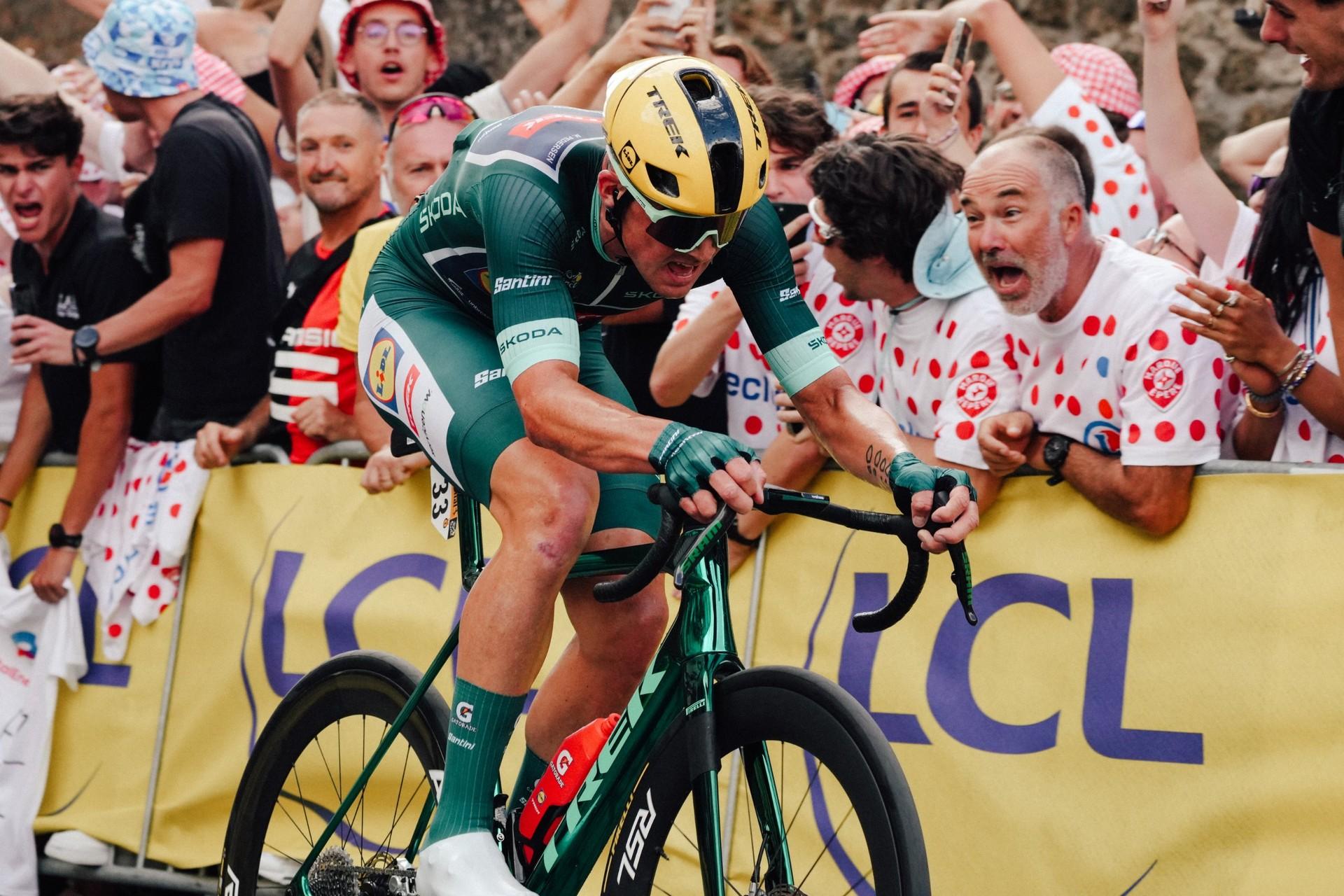
"Although ASO collects a licence fee, the organisers immediately spend a large part of it back here, because around 4,500 people arrive with the Tour convoy and need accommodation," he said.
Who pays?
The budget splits three ways: the licence and preparation phase, the mandatory and production costs ASO requires, and promotion of the country abroad together with domestic cycling and healthy-lifestyle programmes. The first two together come to around 500 million crowns, roughly €20 million. The third is the open question.
"That is the subject of the biggest discussion, because it could cost 50 million or 250 million crowns," Novák said.
Paid media advertising, familiarisation trips for journalists and activities promoting the health benefits of cycling are among the items under consideration for that third part.
About half of the money would come from a government grant through the Národní sportovní agentura, the national sports agency. Prague and the Central Bohemian and South Bohemian regions would share the rest, with South Bohemia paying the largest regional share because it would host two stages.
Private money is limited by the Tour's global sponsorship agreements, which leave little room for local sponsors to appear. Novák said fan zones and side events could give local partners space, and estimated these might cover a percentage of the budget in the low tens. Business has already helped with the groundwork: PPF supplied the helicopter for Prudhomme's inspection because the working group could not afford to hire one, and major Czech car brand Škoda Auto, a major Tour partner, has publicly backed the bid.
Novák wants the government to view the outlay differently. "We need to change our perspective on this, so that we do not see the Grand Départ simply as a one-off payment, but regard it as an investment on which we will earn a return," he said.
While it is a big investment for the nation, previous Grand Départs have shown the return can far outweigh the outlay. The official assessment of the 2023 Basque start put the additional regional revenue at €103.9 million, 8.5 times the organising committee's final budget of €12.2 million. The Czech budget is roughly 1.8–2.5 times that Basque figure.
The Czech bid was first presented at the Czech embassy in Paris on November 14, 2025. Prudhomme called it "an excellent candidature, very well put together" in remarks published by the sports agency, adding that A.S.O. would now assess the details "because several countries are of course seeking to host."
Czechia is not alone in the pursuit of the 2029 Grand Départ. Germany is also pushing to host, with its bid already formalised and sent to ASO on July 29, with German Cycling taking over as the official backer of an application built around Berlin, Saxony, Saxony-Anhalt and Thuringia and the 40th anniversary of the fall of the Berlin Wall.
Czechia already plays host to a large number of races, including the Czech Tour, which is a UCI 2.Pro event that was won by Andrew August (Netcompany-Ineos) earlier in the year. It also hosts the women’s Tour de Feminin that takes place in Bohemia and the prestigious junior race of the Course de la Paix, otherwise known as the Peace Race.
Unlike Bulgaria and Albania, who have hosted the Grande Partenza for the Giro d’Italia, Czechia already has a very strong cycling base with a long history in the sport and very healthy races across the year with mountain biking also a key interest in the area with a World Cup held in Nové Město na Moravě.
Bulgaria and Albania arguably needed to focus on their own cycling structure and invest there, instead of bringing a one-off show to their nation. There is no sign that either country is kicking on from hosting the race. The rumours around the Giro suggest Romania as a possible future host. That, like Czechia, would make more sense as it has a very strong cycling set-up with the Sibiu Tour, Tour de Szeklerland and the Turul României.
Whether Czechia gets the race when facing the financial backing of a nation like Germany remains to be seen, but if it goes the way of the Czech set-up, Germany would still see some of the Tour ride through its territory on stage 4. The 2027 Tour starts in Edinburgh on July 2, and the 2028 race begins in Reims on June 24.