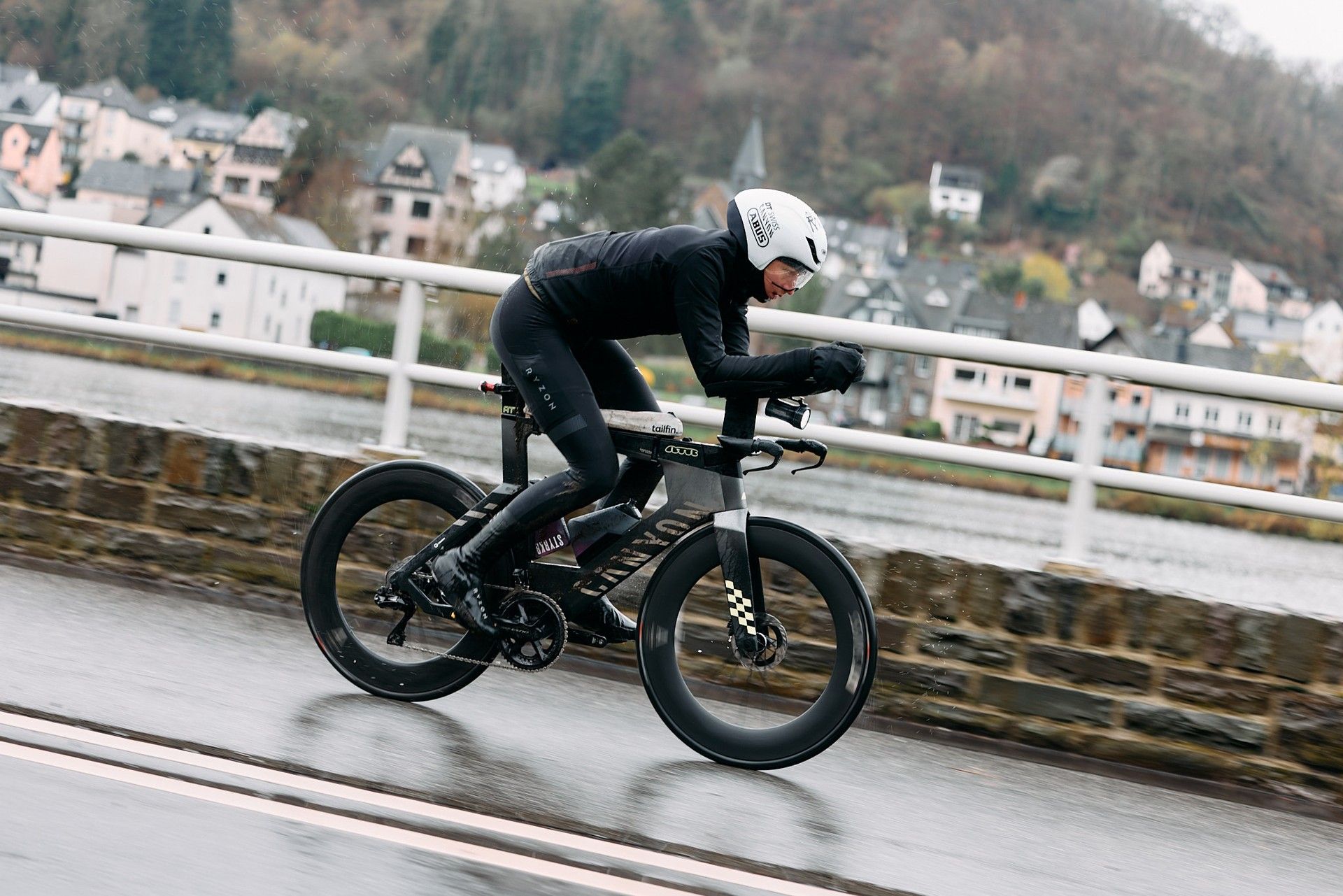
Alex McCormack (Canyon x DT Swiss All-Terrain Racing) completed 3,826.47km in seven days on a repeated 150km out-and-back route along the Moselle river near Koblenz, Germany, on Thursday, April 2. The distance exceeds the previous seven-day record of 3,813.81km by 12.66km.
The record is provisional. Canyon, who co-ordinated the effort and shared the results, explains it was recorded via a Coros Dura bike computer and will be submitted to the World Ultra Cycling Association (WUCA) for ratification, with an application to Guinness World Records to follow.
The 28-year-old from North Yorkshire averaged 18.5 hours per day in the saddle across the week, leaving fewer than five hours for recovery, nutrition and sleep. The attempt was a supported effort, with a small crew providing mechanical assistance, food and clothing changes throughout. It is not comparable to unsupported ultra-distance racing, though McCormack framed it as preparation for exactly that: his summer targets include the Tour Divide, Colorado Trail Race and Arizona Trail Race.
Success was in doubt until the final hours. In comments shared by Canyon, support team member Harry Dowdney said, "In the final few days we knew he had to do massive stints through the night with practically no stops and no sleep to break the record."
Conditions made the attempt harder than planned. McCormack rode through snow, hail and rain across the week, and wet kit became a persistent problem. "The cold was worse than I was expecting," he said. "My kit was getting so wet that trying to stay aero and stay warm was a real challenge. At times I rode with a hot water bottle stuffed inside my jersey. I also stopped for lots of hot showers. There was a lot of time that could have been saved in better weather conditions. But once you've committed, you just crack on with it until you're done."
His daily distances ranged from 451.92km on day four to 727.75km on day seven, when he rode for 25 hours and 46 minutes of moving time in a final push that reportedly included only one hour of sleep in the last 40 hours. By the final day, his neck muscles had deteriorated to the point where he used a bungee cord to hold his head up.
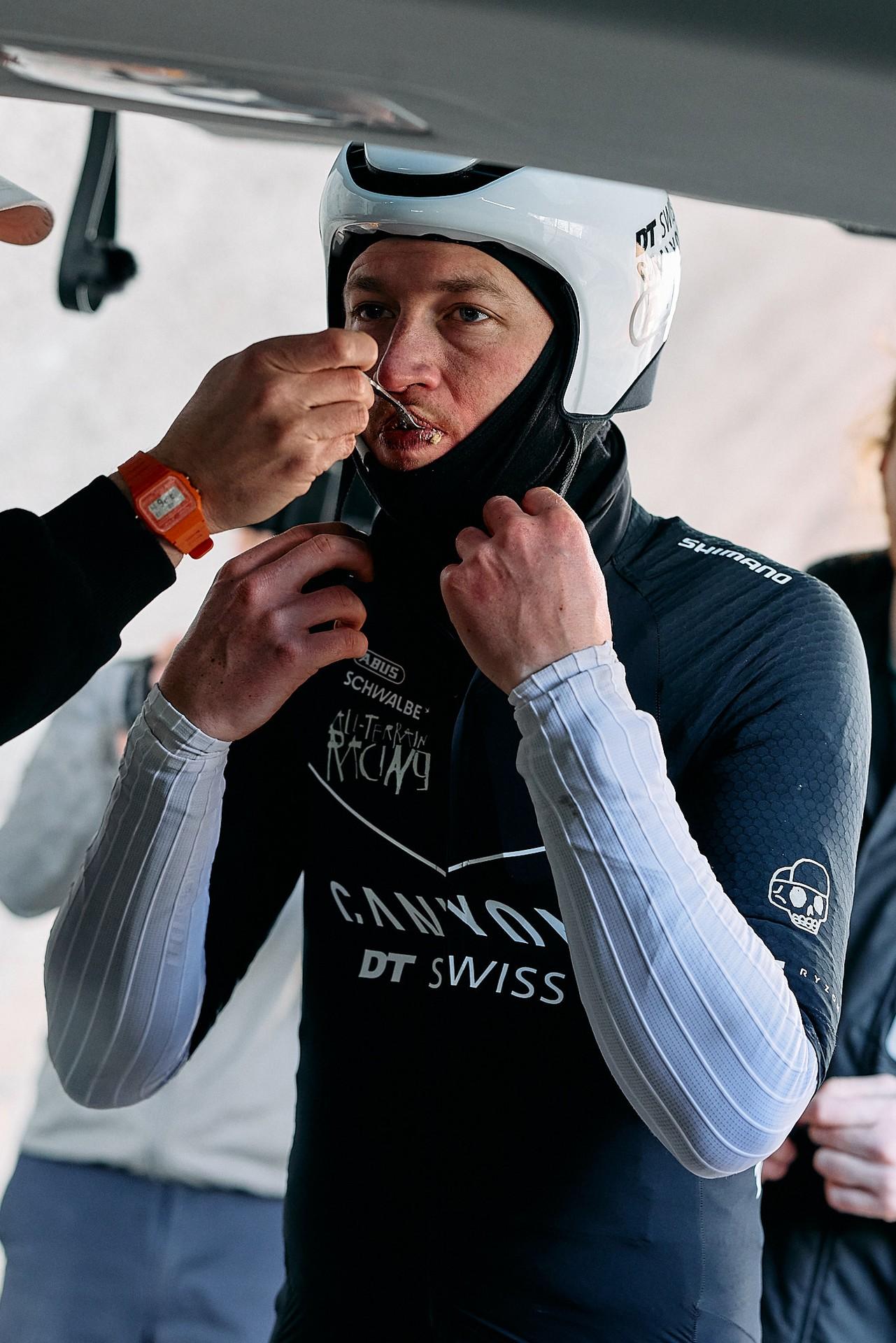
Dowdney said the biggest challenge was keeping McCormack fed and awake. Canyon reported that he burned roughly 14,000 calories a day. "There was no way he could replace those 14,000 calories each day," Dowdney said. "We had to constantly remind him to eat and drink, passing him food as often as we could." His daily intake included brioche buns with peanut butter, bowls of pesto pasta, chicken and rice burritos, carrot cake, carb drinks, multiple coffees and a Snickers ice cream.
The bike
He rode the attempt on a Canyon Speedmax CFR, the brand's triathlon platform, equipped with DT Swiss ARC 1100 carbon wheels and Shimano Dura-Ace.
The flat Moselle route suited the bike's aerodynamic design, though weather, clothing layers and fatigue shaped the ride at least as much as equipment did. The triathlon rather than UCI spec offered advantages for both overall aerodynamics as well as on-bike water and food stowage.
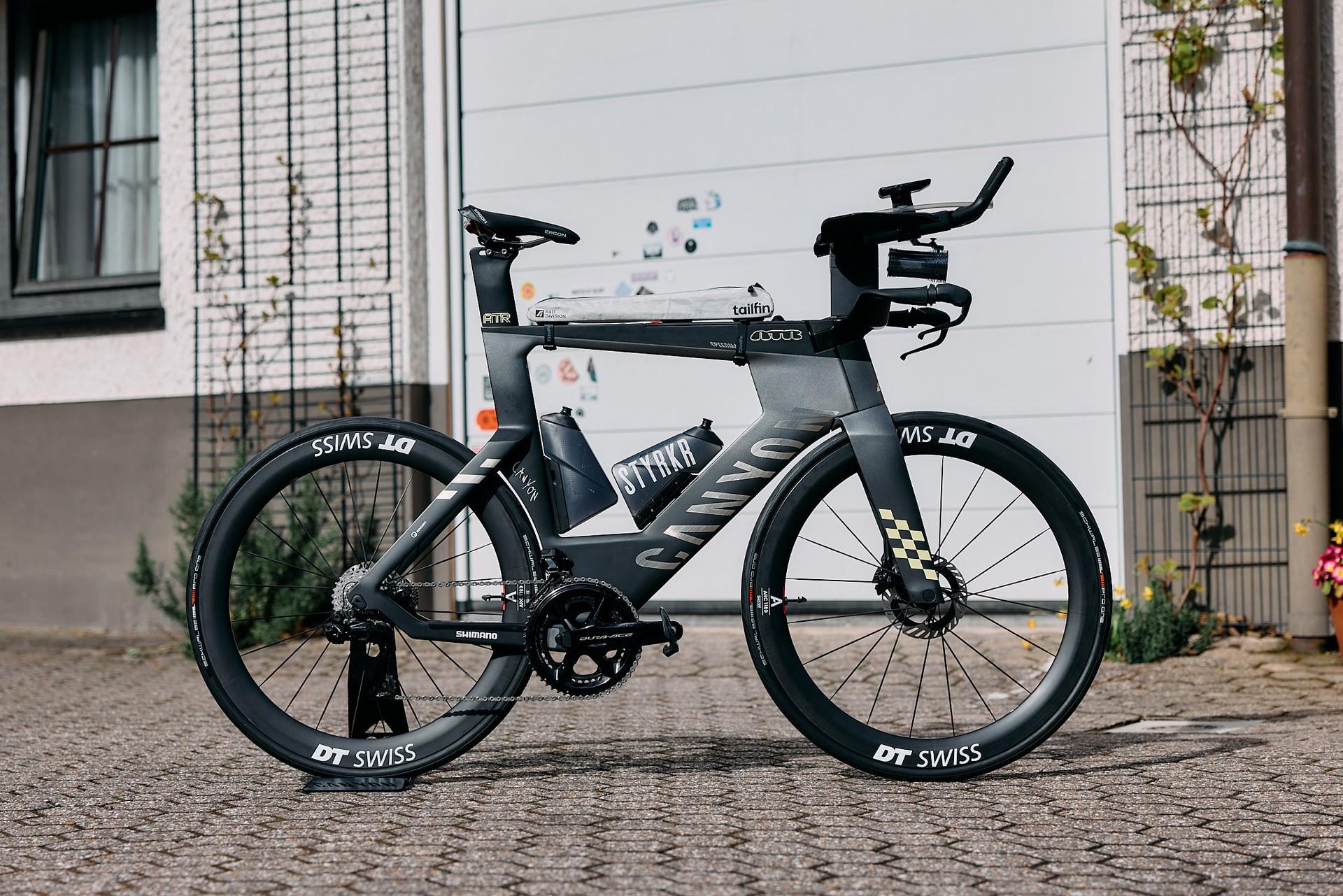
The Speedmax had a set of stacked spacer beneath the extension bars, a typical setup where the aero positioning doubles as a more comfortable extended riding position. Similarly, McCormack appears to have opted for a highly slanted saddle setup to reduce the contact pressure points during hours of riding.
Aerodynamics was clearly critical and very few concessions were made to the additional needs of ultra-riding. Virtually the only drag addition was a Tailfin top tube bag for food and gels, alongside a bulky lights setup for the nighttime riding requirements.
McCormack said he would take roughly a week off the bike before beginning preparation for Unbound XL. "My neck was in a pretty bad way," he said. "My contact areas are pretty sore too."
Photo credits: Canyon/Réka Liziczai